Quick Takeaways
- NO20 electrical steel offers superior efficiency and reduced core losses, making it ideal for high-frequency and high-speed electrical applications.
- Its ultra-thin, non-oriented structure enables compact designs and consistent magnetic properties in all directions.
- The material is particularly well-suited for electric vehicle motors, high-efficiency industrial drives, and compact transformers.
- Multiple NO20 variants allow engineers to tailor material selection to specific performance, size, and cost requirements.
- Selecting the optimal NO20 grade involves balancing application needs, manufacturability, and long-term operational goals.
What is NO20 Electrical Steel?
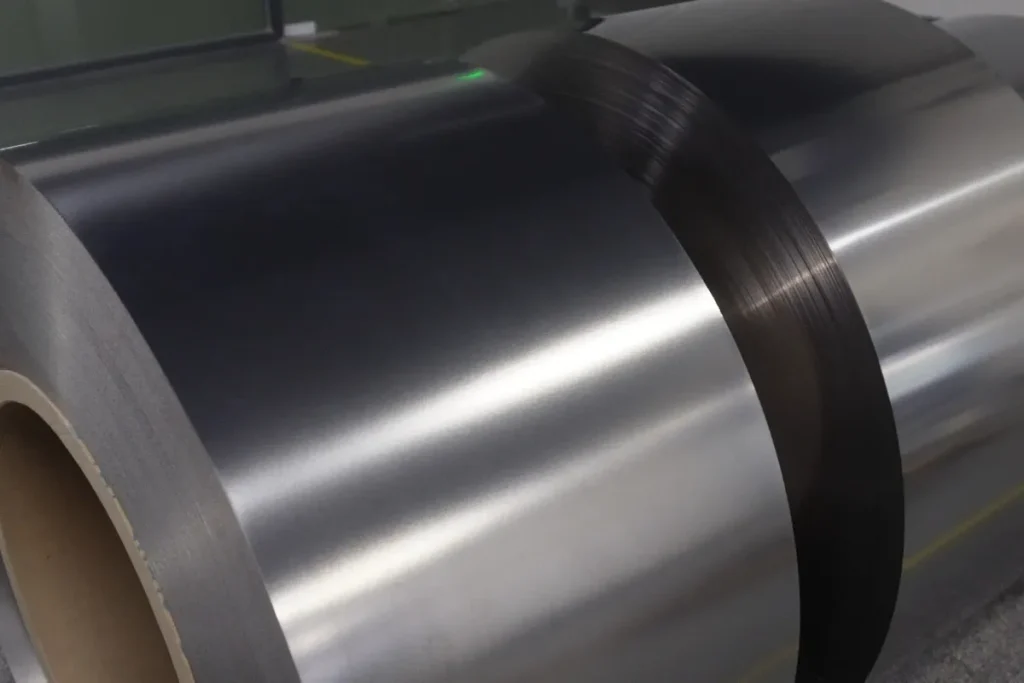
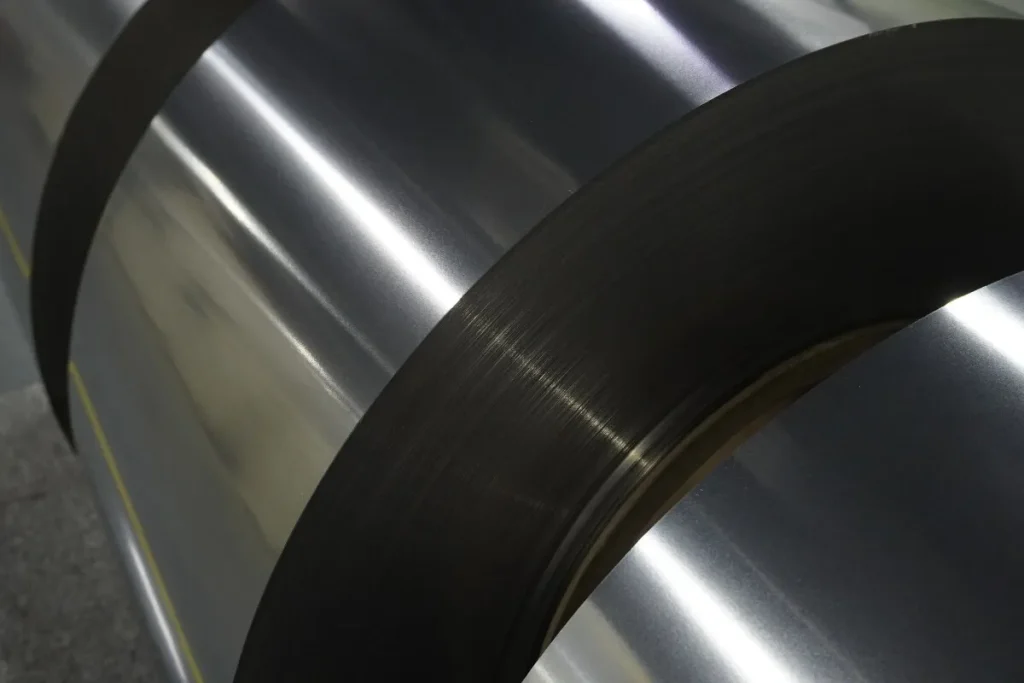
NO20 electrical steel represents a specialized grade of ultra-thin non-oriented electrical steel with a nominal thickness of 0.20 mm. This high-performance material belongs to the family of silicon-iron soft magnetic alloys specifically engineered for electrical applications requiring excellent magnetic properties and minimal energy losses. The designation “NO” indicates its non-oriented crystallographic structure, providing uniform magnetic properties in all directions within the plane of the sheet, while “20” denotes its thickness in hundredths of a millimeter.
NO20 electrical steel has gained significant importance in modern electrical engineering due to its exceptional combination of high magnetic permeability, low core losses, and suitable mechanical properties. These characteristics make it particularly valuable in applications where energy efficiency, size constraints, and performance at elevated frequencies are critical design considerations.
Classification and Standards
NO20 electrical steel falls within the classification of thin non-oriented electrical steel as defined by international standards. This material adheres to two primary regulatory frameworks: EN 10303:2015 (European standard for thin electrical steel strip and sheet for use at medium frequencies) and IEC 60404-8-8:2017 (International Electrotechnical Commission standard for magnetic materials).
These standards establish specific requirements for:
- Maximum core loss values at defined frequencies and magnetic flux densities
- Minimum magnetic polarization values
- Thickness tolerances (typically ±0.02 mm)
- Surface conditions and coating specifications
- Mechanical properties including yield strength and elongation
Within these standards, NO20 steel is further categorized based on its core loss performance, with designations like NO20-1200H indicating a maximum core loss of 12.00 W/kg at 1.5T/50Hz, or NO20-1350N signifying a maximum core loss of 13.50 W/kg at 1.5T/50Hz with enhanced permeability.
How NO20 Differs from Other Electrical Steel Grades
NO20 electrical steel distinguishes itself from other grades through several key characteristics:
- Thickness: At 0.20 mm, NO20 is significantly thinner than conventional non-oriented grades (typically 0.35-0.65 mm), resulting in substantially reduced eddy current losses at medium to high frequencies.
- Frequency Response: While standard grades like M400-50A or M270-35A are optimized for power frequencies (50-60 Hz), NO20 maintains excellent performance across a broader frequency spectrum (50-2500 Hz).
- Silicon Content: NO20 typically contains 2.5-3.5% silicon, higher than many conventional grades, increasing electrical resistivity and reducing magnetostriction.
- Application Focus: Unlike grain-oriented grades (GO) designed primarily for static applications like transformers, NO20 excels in rotating machinery and high-frequency applications where uniform magnetic properties in all directions are essential.
- Core Loss Performance: NO20 offers significantly lower core losses at elevated frequencies compared to thicker grades, making it ideal for high-efficiency, high-speed electrical machines.
This combination of properties positions NO20 electrical steel as the material of choice for advanced applications in e-mobility, high-speed motors, and compact high-frequency transformers where conventional electrical steel grades cannot deliver the required performance.
Technical Specifications and Properties of NO20 Electrical Steel
NO20 electrical steel possesses a unique combination of magnetic, physical, and mechanical properties that make it exceptionally well-suited for high-frequency electrical applications. Understanding these technical specifications is essential for engineers and designers seeking to optimize electrical machine performance. The ultra-thin gauge of NO20 steel (0.20 mm) fundamentally alters its performance characteristics compared to conventional electrical steel grades, particularly in terms of frequency-dependent losses and power density capabilities.
Magnetic Properties of NO20 Steel
The magnetic properties of NO20 electrical steel represent its most critical performance characteristics. These properties directly influence the efficiency, size, and thermal behavior of electrical machines utilizing this material.
Key magnetic parameters include:
- Core Loss: NO20 steel exhibits significantly lower core losses at elevated frequencies compared to thicker grades. Typical values range from 12.0-13.5 W/kg at 1.5T/50Hz for standard variants, with specialized grades achieving values as low as 11.0 W/kg.
- Magnetic Polarization: High-quality NO20 steel achieves magnetic polarization values of approximately 1.7-1.8 Tesla at field strengths of 5000 A/m, enabling compact machine designs with high power density.
- Permeability: Relative permeability typically ranges from 2000-5000 at 1.5T, with specialized variants optimized for higher permeability (designated with “N” suffix) or lower core losses (designated with “H” suffix).
- Magnetostriction: The silicon content in NO20 steel reduces magnetostriction to approximately 8-12 ppm, minimizing acoustic noise in high-frequency applications.
The frequency-dependent core loss characteristics are particularly important, with losses increasing non-linearly with frequency according to the relationship:
P = Ph + Pe = kh·f·Bm^n + ke·f^2·Bm^2
Where Ph represents hysteresis losses, Pe represents eddy current losses, f is frequency, and Bm is maximum flux density.
Physical and Mechanical Characteristics
Beyond its magnetic properties, NO20 electrical steel must possess suitable physical and mechanical characteristics to withstand manufacturing processes and operational stresses:
- Density: Approximately 7650 kg/m³, slightly lower than pure iron due to silicon content
- Electrical Resistivity: 0.45-0.55 μΩ·m, significantly higher than pure iron (0.10 μΩ·m)
- Thermal Conductivity: 25-30 W/(m·K), lower than pure iron due to silicon content
- Yield Strength: 350-450 MPa, depending on processing history
- Tensile Strength: 450-550 MPa
- Elongation: 15-25%, providing sufficient formability for manufacturing processes
- Hardness: 150-180 HV, higher than conventional grades due to increased silicon content
- Curie Temperature: Approximately 740-760°C
These mechanical properties must balance sufficient strength for handling during manufacturing with adequate ductility for forming operations. The ultra-thin nature of NO20 steel presents unique challenges in maintaining flatness and preventing damage during processing.
Variants of NO20 Steel (NO20-1200H, NO20-1350N)
NO20 electrical steel is available in several variants optimized for specific performance characteristics:
| Variant | Core Loss (W/kg) at 1.5T/50Hz | Polarization (T) at 5000 A/m | Optimization Focus |
|---|---|---|---|
| NO20-1200H | ≤ 12.00 | ≥ 1.70 | Low core losses (High efficiency) |
| NO20-1350N | ≤ 13.50 | ≥ 1.75 | High permeability (Compact design) |
| NO20-1100 | ≤ 11.00 | ≥ 1.68 | Premium grade (Ultra-high efficiency) |
| NO20-1500 | ≤ 15.00 | ≥ 1.78 | Standard grade (Cost-effective) |
The “H” suffix indicates variants optimized for minimized hysteresis losses, particularly valuable in applications with frequent start-stop cycles. The “N” suffix denotes variants with enhanced permeability, beneficial for applications requiring high magnetic flux density at lower magnetizing forces.
Each variant offers distinct advantages in specific applications:
- NO20-1200H excels in continuous-duty high-efficiency motors
- NO20-1350N provides superior performance in compact designs with space constraints
- Premium grades offer exceptional performance for specialized applications where efficiency is paramount
- Standard grades provide cost-effective solutions for less demanding applications
The selection between these variants depends on the specific requirements of the application, including efficiency targets, size constraints, operating frequency, and cost considerations.
Applications of NO20 Electrical Steel
NO20 electrical steel finds its primary applications in advanced electrical systems where efficiency, size constraints, and performance at elevated frequencies are critical design considerations. The unique combination of low core losses and excellent magnetic properties at reduced thickness makes NO20 particularly valuable in next-generation electrical machines and devices. As industries increasingly prioritize energy efficiency and power density, the demand for specialized materials like NO20 electrical steel continues to grow across multiple sectors.
Why is NO20 Steel Ideal for E-Mobility Applications?
NO20 electrical steel has emerged as a preferred material for electric vehicle (EV) powertrains due to several distinct advantages that directly address the critical challenges in e-mobility applications:
- Enhanced Efficiency: The reduced thickness of NO20 steel minimizes eddy current losses at the higher operating frequencies typical in EV motors (typically 400-1000 Hz), directly translating to extended vehicle range. Studies demonstrate efficiency improvements of 2-3% compared to conventional grades, which can extend EV range by 8-12 km per charge cycle.
- Superior Power Density: The excellent magnetic properties of NO20 enable higher flux densities and more compact motor designs, addressing the severe space constraints in vehicle architectures. Motors utilizing NO20 can achieve power densities exceeding 5 kW/kg compared to 3-4 kW/kg with conventional grades.
- Improved Thermal Management: Lower core losses generate less heat during operation, reducing cooling requirements and allowing for more sustained high-power operation without thermal derating. This characteristic is particularly valuable in performance vehicles and rapid charging scenarios.
- Weight Reduction: The combination of higher power density and reduced cooling requirements contributes to overall weight savings in the powertrain, directly improving vehicle efficiency and performance. Typical weight reductions of 15-20% are achievable in the stator core compared to designs using conventional electrical steel.
- Higher Maximum Speed: The reduced eddy current losses at elevated frequencies enable efficient operation at higher rotational speeds, allowing for direct-drive configurations that eliminate the need for reduction gearing in some applications.
These advantages make NO20 electrical steel particularly valuable in premium electric vehicles where performance and efficiency are paramount, as well as in hybrid vehicles where compact motor designs must integrate with conventional powertrains.
Transformer and Generator Applications
Beyond e-mobility, NO20 electrical steel offers significant advantages in specialized transformer and generator applications:
High-Frequency Transformers: In power electronic applications operating at frequencies from 400 Hz to several kHz, NO20 steel enables compact, efficient transformer designs. Applications include:
- Aerospace power systems operating at 400 Hz
- Switch-mode power supplies for telecommunications
- Induction heating equipment
- Resonant converters for renewable energy systems
Compact Generators: In applications where size and weight constraints are critical, NO20 steel enables higher-frequency generator designs with improved power density:
- Portable power generation systems
- Wind turbine direct-drive generators
- Aircraft auxiliary power units
- Micro-turbine generators
Specialized Electromagnetic Devices: The unique properties of NO20 steel benefit various specialized applications:
- Magnetic bearings operating at high rotational speeds
- Electromagnetic actuators requiring rapid response
- Sensors and measurement devices requiring precise magnetic characteristics
- Medical equipment where size constraints and efficiency are critical
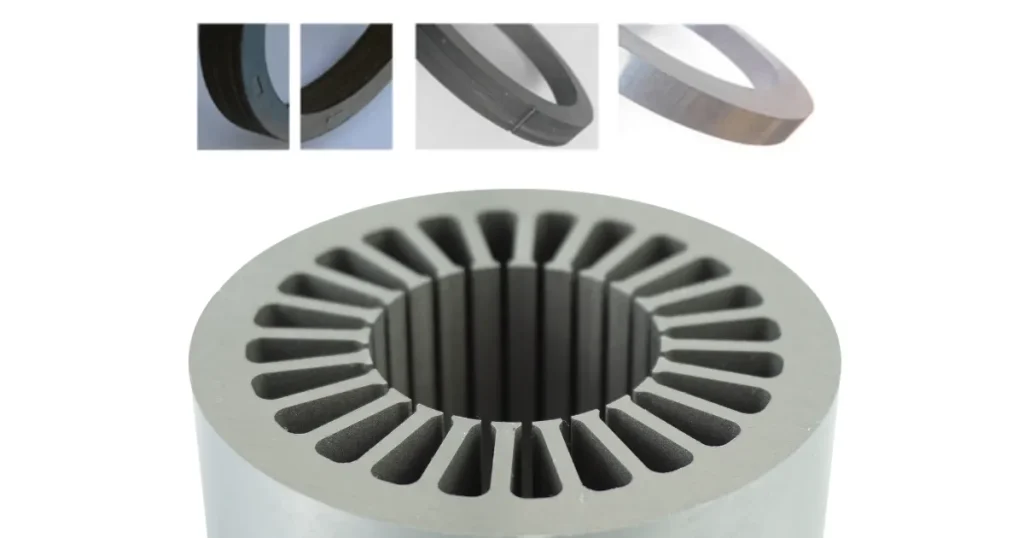
In these applications, the primary benefits of NO20 electrical steel include reduced size and weight, improved efficiency, better thermal performance, and enhanced response to rapid flux changes. The material’s consistent magnetic properties in all directions (non-oriented nature) make it particularly suitable for applications involving rotating fields or complex flux paths.
As industries continue to push toward higher operating frequencies, greater efficiency, and increased power density, the role of specialized materials like NO20 electrical steel becomes increasingly important in enabling next-generation electromagnetic devices.
How to Select the Right NO20 Steel Variant
Selecting the optimal NO20 electrical steel variant requires a systematic approach that balances technical requirements, manufacturing considerations, and economic factors. The selection process should begin with a thorough analysis of the application requirements and operating conditions, followed by careful evaluation of the available material options. This methodical approach ensures that the selected material will deliver the required performance while minimizing unnecessary costs.
Matching Steel Properties to Application Requirements
The selection of the appropriate NO20 electrical steel variant should be driven by a comprehensive understanding of the application’s specific requirements:
- Operating Frequency: The frequency range significantly influences the optimal material choice. For applications operating primarily at power frequencies (50-60 Hz), standard NO20 variants may be sufficient. For higher frequencies (400-2500 Hz), specialized variants with optimized high-frequency loss characteristics become essential.
- Flux Density Requirements: Applications requiring operation at higher flux densities (>1.5T) benefit from variants with higher permeability (N-type), while those prioritizing efficiency at moderate flux densities may favor variants optimized for low losses (H-type).
- Efficiency Targets: For applications where efficiency is paramount (such as premium electric vehicles or high-efficiency industrial motors), premium grades with the lowest core losses (NO20-1100 or NO20-1200H) justify their higher cost through lifetime energy savings.
- Size Constraints: When space limitations are critical, variants offering higher saturation flux density and permeability enable more compact designs, even if they have slightly higher core losses.
- Thermal Considerations: Applications with limited cooling capacity or continuous high-load operation benefit from variants with lower core losses to minimize heat generation.
- Manufacturing Process Compatibility: The intended manufacturing methods (laser cutting, stamping, etc.) may favor certain coating types or material properties to ensure optimal production quality.
A systematic evaluation matrix can help quantify these considerations:
| Application Requirement | Weight Factor | NO20-1200H Score | NO20-1350N Score | NO20-1100 Score |
|---|---|---|---|---|
| High-Frequency Performance | 0.30 | 4 | 3 | 5 |
| Permeability/Compactness | 0.25 | 3 | 5 | 3 |
| Efficiency/Low Losses | 0.25 | 4 | 3 | 5 |
| Cost Effectiveness | 0.20 | 3 | 4 | 2 |
| Weighted Total | 1.00 | 3.55 | 3.75 | 3.90 |
This quantitative approach helps identify the optimal material variant based on the specific priorities of the application.
What Performance Factors Should You Consider?
When evaluating NO20 electrical steel variants, several key performance factors should be considered beyond the standard specifications:
- Loss Separation Characteristics: Understanding the breakdown between hysteresis losses and eddy current losses at the specific operating conditions helps identify the most suitable variant. Materials with lower hysteresis components perform better in applications with frequent flux reversals.
- Temperature Dependency: Core losses typically increase with temperature at a rate of approximately 0.2-0.4% per °C. Some variants exhibit better temperature stability, which is crucial for applications with variable operating temperatures.
- Minor Loop Performance: Applications involving non-sinusoidal excitation or partial flux reversals should consider the material’s performance under minor loop conditions, which may differ significantly from standard testing conditions.
- Harmonics Response: The material’s behavior under non-sinusoidal excitation containing harmonics can significantly impact overall performance in applications with inverter-fed motors or power electronic interfaces.
- Mechanical Stress Sensitivity: Manufacturing processes and assembly methods can introduce mechanical stresses that degrade magnetic properties. Some variants exhibit greater resilience to these effects.
- Aging Stability: Long-term performance stability under thermal cycling and mechanical vibration varies between material variants and should be considered for applications with extended service life requirements.
- Punching/Cutting Edge Effects: The degradation of magnetic properties near cut edges affects overall performance, particularly in designs with fine features. This effect varies between material variants and processing methods.
These performance factors should be evaluated through a combination of manufacturer data, specialized testing, and simulation to ensure the selected material will perform as expected under actual operating conditions. Collaboration with material suppliers during the selection process can provide valuable insights into these more nuanced performance characteristics.
By systematically evaluating both standard specifications and these additional performance factors, engineers can select the optimal NO20 electrical steel variant that best meets the specific requirements of their application, balancing performance, manufacturability, and cost considerations.
Comparing NO20 with Other Electrical Steel Grades
Understanding how NO20 electrical steel compares with other grades is essential for making informed material selection decisions. Each electrical steel grade offers distinct advantages and limitations that make it suitable for specific applications. This comparative analysis helps engineers determine when NO20 represents the optimal choice and when alternative grades might better meet application requirements.
NO20 vs. NO10 and NO30: When to Choose Each
The primary non-oriented electrical steel grades in the ultra-thin category include NO10 (0.10 mm), NO20 (0.20 mm), and NO30 (0.30 mm). Each thickness variant offers a different balance of performance characteristics:
NO10 (0.10 mm)
- Advantages: Offers the lowest eddy current losses at high frequencies (>1000 Hz), enabling exceptional efficiency in very high-frequency applications. Core loss reductions of 30-40% compared to NO20 at frequencies above 1000 Hz.
- Limitations: Significantly higher material cost (typically 40-60% premium over NO20), more challenging to handle during manufacturing, lower stacking factor, and reduced mechanical strength.
- Optimal Applications: Ultra-high-speed motors (>20,000 RPM), specialized aerospace applications, high-frequency power electronics, and premium electric vehicle motors where efficiency justifies the cost premium.
NO20 (0.20 mm)
- Advantages: Balanced performance offering substantial high-frequency loss reduction compared to conventional grades while maintaining reasonable cost and manufacturability. Represents the “sweet spot” for many advanced applications.
- Limitations: Higher material cost than conventional grades, requires more careful handling than thicker materials, higher lamination count for equivalent core height.
- Optimal Applications: Electric vehicle traction motors, high-efficiency industrial drives, compact generators, and medium-frequency transformers (400-1000 Hz).
NO30 (0.30 mm)
- Advantages: Better mechanical handling properties than thinner grades, lower material cost, higher stacking factor, suitable for moderate frequency applications.
- Limitations: Higher eddy current losses at elevated frequencies compared to NO10 and NO20, limiting efficiency in high-frequency applications.
- Optimal Applications: General industrial motors, standard efficiency vehicle applications, applications transitioning from conventional to high-frequency operation.
The selection between these grades should be based on a comprehensive evaluation of performance requirements, manufacturing capabilities, and economic considerations:
| Factor | NO10 | NO20 | NO30 |
|---|---|---|---|
| Core Loss at 400 Hz | Excellent | Very Good | Good |
| Core Loss at 1000 Hz | Excellent | Good | Moderate |
| Material Cost | High | Moderate | Lower |
| Manufacturing Complexity | High | Moderate | Lower |
| Mechanical Robustness | Lower | Moderate | Better |
| Stacking Factor | Lower | Moderate | Higher |
Conclusion
NO20 electrical steel is a high-performance solution for demanding electrical applications where efficiency, size, and frequency response are critical. By understanding its unique properties and carefully matching variants to application needs, engineers can achieve superior machine performance. For optimal results, consult with material experts to select the best NO20 grade for your project.
FAQ
What makes NO20 electrical steel different from conventional grades?
Its ultra-thin, non-oriented structure delivers lower core losses and better performance at higher frequencies.
Where is NO20 electrical steel most commonly used?
It is widely used in electric vehicle motors, high-efficiency industrial motors, and compact high-frequency transformers.
How do I choose the right NO20 variant for my application?
Evaluate your operating frequency, efficiency requirements, and design constraints to select the most suitable NO20 grade.
Why are insulation coatings important for NO20 electrical steel?
They reduce eddy current losses, improve durability, and are critical for maintaining performance in high-frequency environments.