Quick Takeaways
- eVTOL motor technologies represent a specialized category that significantly diverges from conventional electric motors, with aviation requirements driving unprecedented advances in power density and reliability.
- The architecture of an eVTOL aircraft (multicopter, lift+cruise, tilt-rotor, or vectored thrust) fundamentally determines the optimal motor selection and integration strategy.
- Thermal management represents the most frequently underestimated challenge in eVTOL motor design, requiring innovative cooling solutions that maintain performance without adding prohibitive weight.
- Beyond the primary propulsion system, the complete eVTOL motor ecosystem includes critical components like control surface actuators, which have their own specialized requirements.
What Makes eVTOL Motors Different from Conventional Electric Motors?
Electric motors for eVTOL aircraft represent a specialized category that diverges significantly from conventional electric motors. Aviation applications demand an entirely different performance envelope balancing multiple competing priorities simultaneously.
The Unique Performance Requirements of Aviation Applications
Aviation motors must handle dramatic load variations during different flight phases, delivering peak power during vertical takeoff and landing while maintaining efficiency during cruise. They must function reliably at varying altitudes, temperatures, and atmospheric conditions—all while meeting strict certification standards that verify performance across environmental extremes that ground-based motors never encounter.
How Weight-to-Power Ratio Defines eVTOL Capabilities
Weight-to-power ratio fundamentally defines what’s possible in eVTOL design. Most eVTOL motors achieve power densities exceeding 5kW/kg—approximately three times higher than high-performance industrial motors. This extreme power density requirement drives innovations in materials, cooling systems, and electromagnetic design. The cascading effects of motor weight impact payload capacity, flight range, hover time, battery requirements, and structural needs. A mere 10% improvement in motor weight can translate to 3-5% increased range due to compounding effects.
Why Reliability Standards Are Higher for Aviation Motors
Aviation motors require certification to standards ensuring probability of failure remains below 10^-9 per flight hour in critical systems—far exceeding industrial motor requirements. This translates to comprehensive redundancy, rigorous testing protocols, and materials selection that prioritizes consistency over cost. Aviation motors must demonstrate performance across extreme environmental conditions including temperature ranges from -40°C to +85°C, significant altitude variations, and challenging vibration profiles.
Core eVTOL Motor Technologies
The propulsion foundation of modern eVTOL aircraft relies on several key motor technologies, each offering distinct advantages for specific applications within vertical mobility.
Brushless DC (BLDC) Motors: The Foundation of eVTOL Propulsion
BLDC motors form the backbone of eVTOL propulsion due to their favorable power-to-weight ratios and straightforward control mechanisms. These motors typically achieve efficiency ratings between 85-92% and power densities of 3-5kW/kg. Their primary advantages include simplified thermal management, lower production costs, well-established control algorithms, and robust performance across varying flight conditions.
Permanent Magnet Synchronous Motors (PMSM): Advantages for Flight Control
PMSM motors offer superior efficiency (92-96%) and precise control characteristics valuable for flight applications. They utilize sinusoidal back-EMF waveforms rather than trapezoidal patterns, resulting in smoother torque delivery and reduced vibration. These characteristics make them particularly suitable for applications requiring precise control, such as tilt mechanisms or primary propulsion in larger aircraft where efficiency directly impacts range.
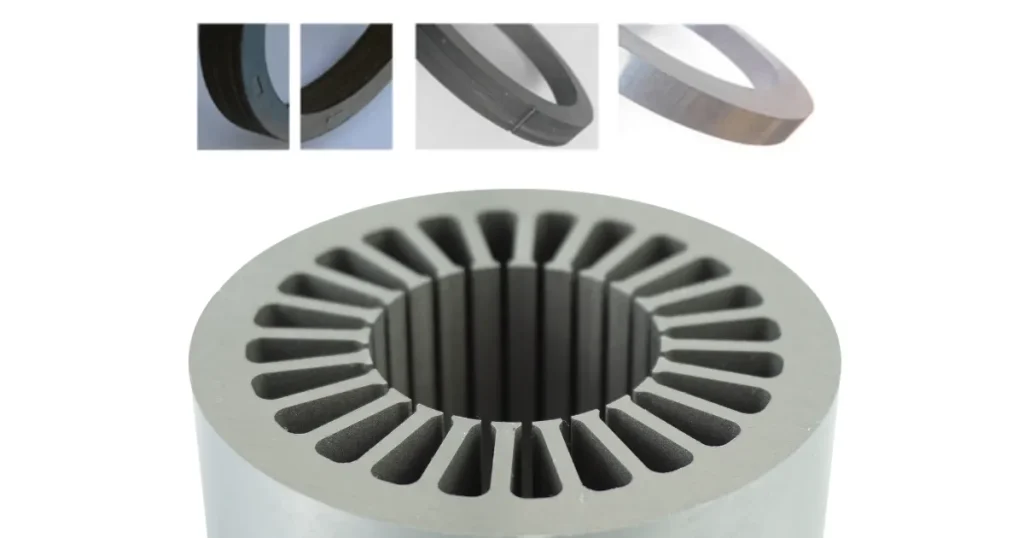
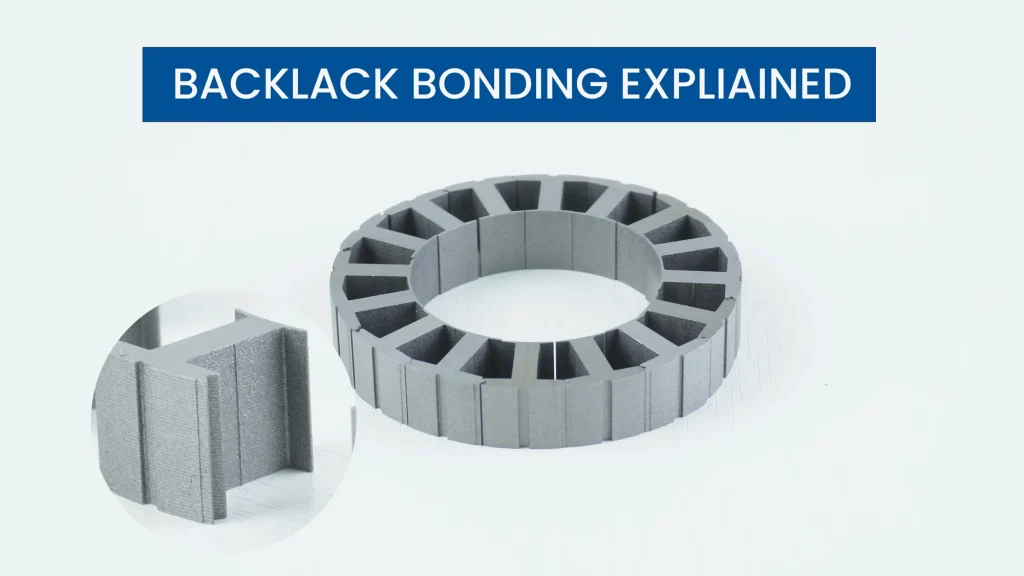
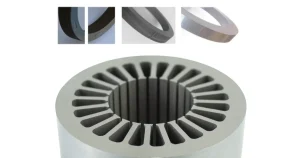
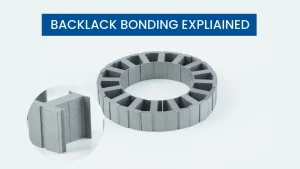
Note: Our self-bonding full-surface technology at Huaci Technologies ensures silicon steel laminations are gap-free and seamlessly bonded into unified structures with no interference to the magnetic circuit. This allows motor designers to achieve the power density and efficiency targets required for viable urban air mobility solutions.
Are Axial Flux Motors Revolutionizing eVTOL Performance?
Axial flux motors are increasingly revolutionizing eVTOL performance by fundamentally redesigning motor geometry. Unlike radial flux designs, axial flux motors generate magnetic flux parallel to the rotation axis, enabling improved cooling and power density. Key advantages include power densities up to 7-10kW/kg, peak efficiencies exceeding 96%, more effective cooling surface area, and pancake form factors that integrate efficiently with aircraft structures.
Comparing Motor Technologies: Which Performs Best for Different Applications?
| Motor Type | Power Density | Efficiency | Control Complexity | Relative Cost | Best Applications |
|---|---|---|---|---|---|
| BLDC | 3-5kW/kg | 85-92% | Medium | 1.0x | Smaller eVTOLs, control surfaces |
| PMSM | 4-6kW/kg | 92-96% | High | 1.3-1.5x | Main propulsion, precision control |
| Axial Flux | 7-10kW/kg | 94-98% | High | 1.5-2.0x | Performance-critical applications |
Selection involves analyzing mission profiles, determining power requirements, and evaluating thermal constraints within the aircraft’s overall design envelope.
Critical Performance Parameters for eVTOL Motors
The viability of eVTOL aircraft hinges on motor performance characteristics that must simultaneously satisfy competing operational demands.
What Power Density Is Required for Vertical Takeoff?
Vertical takeoff creates the most demanding design challenge for eVTOL motors. Unlike fixed-wing aircraft, eVTOLs must generate sufficient lift to overcome their entire weight immediately. This translates to power requirements exceeding 1.5kW/kg of total aircraft mass during takeoff. For a 2,000kg air taxi, motors must collectively deliver over 3MW of peak power while weighing less than 150kg—pushing power density requirements above 5kW/kg.
How Does Efficiency Impact Range and Flight Time?
Efficiency metrics directly impact range through their effect on battery utilization. A 1% efficiency improvement translates to approximately 3-4% increased range. Motor efficiency varies across operating conditions. Temperature effects can degrade efficiency by 0.1-0.3% per °C above optimal. Efficiency must be maintained across varying altitudes and environmental conditions.
Thermal Management: Solving the Heat Dissipation Challenge
Thermal management represents perhaps the most underappreciated challenge in eVTOL motor design. Unlike ground vehicles, aircraft motors must dissipate substantial heat while minimizing weight penalties. Modern solutions include direct liquid cooling systems, phase-change materials, advanced ceramic insulation systems, and optimized housing designs for passive cooling.
Vibration and Noise Reduction Techniques
Vibration and noise reduction have evolved from secondary concerns to primary design drivers. Advanced reduction techniques include active vibration cancellation systems, acoustic encapsulation technologies, optimized electromagnetic designs that minimize cogging torque, and multi-stage isolation systems. Successful strategies typically reduce perceived noise by 15-20dB compared to first-generation designs.
Motor Integration Across Different eVTOL Architectures
The integration of electric motors varies dramatically across different architectural approaches, with each configuration presenting unique challenges and opportunities.
Multicopter Designs: Distributed Motor Requirements
Multicopter designs employ distributed motors across multiple rotors (typically 6-12) that provide both lift and directional control. This architecture demands motors with identical performance characteristics, high torque at low RPM, rapid response rates, and redundancy capabilities.
Lift-Plus-Cruise: Optimizing Motors for Different Flight Phases
Lift-plus-cruise configurations separate vertical lift and forward propulsion functions, optimizing motors for their specific roles. Lift motors are optimized for maximum thrust during takeoff/landing but inactive during cruise. Cruise motors are designed for efficiency at sustained power during horizontal flight.
Tilt-Rotor Configurations: Motors with Directional Versatility
Tilt-rotor configurations present complex motor integration challenges, requiring motors that maintain optimal performance across multiple operating angles. The primary advantage is using the same motors for both lift and forward thrust, potentially improving overall efficiency.
Vectored Thrust: Performance Under Varying Conditions
Vectored thrust designs employ ducted electric propulsors with thrust direction control capabilities. This architecture typically uses higher quantities of smaller, high-RPM motors (12-36) integrated directly into control surfaces.
Beyond Propulsion: The Complete Motor Ecosystem
Successful implementation of eVTOL motor technology extends beyond primary propulsion units to encompass a complex ecosystem of interconnected motor systems.
Control Surface Actuation Motors: The Forgotten Critical Components
Control surface actuation motors represent critical components frequently overlooked in eVTOL discussions. Unlike conventional aircraft using hydraulic systems, electric aircraft require dedicated high-performance servo motors for control surfaces with typical power ratings of 200W-2kW, extremely high torque density requirements (>20Nm/kg), and precise positioning accuracy (±0.1° or better).
Power Distribution Systems: Connecting Batteries to Motors
Power distribution systems create the critical backbone connecting batteries to motors through high-voltage DC buses (typically 500-800V), power electronics with wide-bandgap semiconductors achieving 99%+ efficiency, electromagnetic interference (EMI) shielding, and thermal management systems for power electronics.
Sensor Integration for Real-Time Performance Monitoring
Advanced motor systems incorporate extensive sensor networks including embedded temperature sensors within windings, Hall-effect sensors for precise commutation timing, current/voltage monitoring for power quality analysis, and vibration sensors detecting mechanical anomalies.
Redundancy Systems: When Failure Is Not an Option
Redundancy follows a hierarchical strategy: component-level redundancy with dual windings within motors, unit-level redundancy with multiple motors capable of maintaining flight if others fail, system-level redundancy with independent power sources and control systems, and architectural redundancy enabling safe operation in degraded states.
Manufacturing Challenges and Solutions
The production of aviation-grade eVTOL motors presents unique manufacturing challenges requiring specialized processes and quality control measures.
Precision Requirements for Aerospace-Grade Motors
Manufacturing tolerances for critical components typically range from ±0.005mm to ±0.02mm—approximately 5-10 times stricter than automotive-grade motors. These precision demands affect rotor-stator air gaps (uniformity within 0.1mm), lamination stacking (perpendicularity within 0.05°), winding patterns (consistent tension and placement), and balancing specifications (<0.1g·cm residual imbalance).
How Are Advanced Materials Transforming Motor Capabilities?
Advanced materials are transforming motor capabilities: copper-clad aluminum windings (40% weight reduction), silicon carbide power semiconductors (99%+ efficiency), carbon fiber composites (50% weight reduction), soft magnetic composites allowing complex 3D magnetic flux paths, and high-temperature insulations (240°C continuous operation).
Testing and Validation Protocols for Aviation Motors
Testing and validation protocols employ multi-stage verification approaches including component testing for materials properties and dimensional conformity, subassembly verification for electrical and mechanical characteristics, full motor dynamometer testing, environmental testing across temperature extremes, endurance testing exceeding 1,000 hours, and EMI/EMC verification. These protocols must conform to standards including DO-160G and emerging eVTOL-specific requirements.
Conclusion
Electric motors represent the technological keystone determining the viability and performance envelope of the entire eVTOL ecosystem. Their outsized influence extends beyond propulsion to define aircraft capabilities, operational economics, and regulatory pathways.
The technical evolution of eVTOL motors continues to outpace projections, with power densities doubling approximately every 7-8 years while achieving efficiency improvements and noise reductions. This technological trajectory directly enables aircraft with longer ranges, higher payloads, and lower operating costs.
Motor technology advancements create cascading benefits throughout aircraft systems, from extending range through efficiency to improving community acceptance through noise reduction. As the industry progresses toward commercial operations, motor technology increasingly represents a critical competitive differentiator.
The ultimate success of eVTOL aircraft will be determined not by a single breakthrough but through systematic refinement of motor systems balancing multiple competing priorities—efficiency, weight, reliability, noise, cost, and manufacturability.
Frequently Asked Questions
Which motor technology offers the best balance of performance and certification feasibility for near-term eVTOL applications?
PMSM (Permanent Magnet Synchronous Motors) currently offer the optimal balance of efficiency, power density, and established certification pathways, while axial flux designs show promise but face more certification challenges due to limited operational history.
How significant is the impact of self-bonded motor cores compared to traditional manufacturing methods?
Self-bonded cores, like those from Huaci Technologies, can reduce core losses by up to 10-30% while enhancing structural integrity and reducing vibration—critical improvements for aircraft where every efficiency percentage directly impacts range and payload capacity.
What is the typical development timeline for a new eVTOL motor from concept to certification?
A new aviation-grade motor typically requires 3-4 years of development, including 18-24 months of testing and certification activities, though this timeline can extend significantly for novel technologies without established certification precedents.