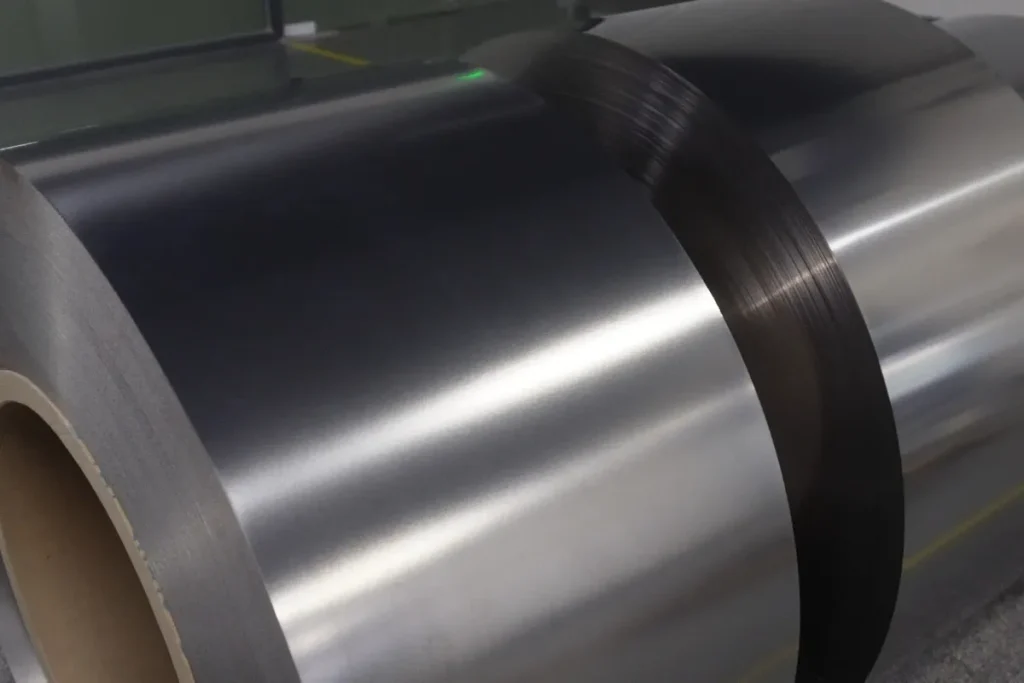
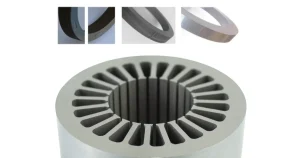
Hiperco 50 and 1J22 are high-performance soft magnetic alloys widely used in aerospace, power electronics, precision instruments, and other advanced applications. While both materials share many similarities, they also exhibit subtle differences in composition, performance, manufacturing standards, and historical context. This article provides a detailed comparative analysis of these two alloys and explores the background behind their regional naming conventions.
Key Takeaways
- Similar Composition and Performance: Hiperco 50 and 1J22 are high-performance iron-cobalt-vanadium soft magnetic alloys with nearly identical compositions and properties, including high saturation magnetic induction (~2.4 Tesla) and excellent magnetic performance.
- Regional Variants: Hiperco 50, developed in the U.S., and 1J22, developed in China, are essentially regional variations of the same material, tailored to meet different national standards (ASTM A801 vs GB/T15002).
- Applications Across Industries: Both alloys are widely used in aerospace, power electronics, medical devices, and other high-tech industries due to their superior magnetic properties and mechanical strength.
- Subtle Differences: Hiperco 50 has stricter impurity control and slightly different cobalt and vanadium content compared to 1J22, which may result in minor differences in specific applications.
- Global Naming Conventions: These alloys are known by different names worldwide (e.g., Permendur in the UK, Vacoflux 50 in Germany), reflecting regional industrial practices but maintaining similar performance characteristics.
- Interchangeability: In most practical applications, Hiperco 50 and 1J22 are interchangeable, making them versatile materials for global use in advanced engineering fields.
Hiperco 50 vs 1J22: Quick Comparison Table
| Property | Hiperco 50 | 1J22 |
|---|---|---|
| Origin | USA (Carpenter Technology) | China |
| Standard | ASTM A801, MIL-A-47182 | GB/T15002 |
| Cobalt Content | 48.5% | 49.0-51.0% |
| Vanadium Content | Higher | 0.80-1.80% |
| Density | 8.12 g/cm³ | ~8.20 g/cm³ |
| Curie Temperature | 938°C | ~940°C |
| Saturation Magnetic Induction | ~2.4 Tesla | ~2.4 Tesla |
| Maximum Relative Permeability | Up to ~18,000 | Similar |
| Coercive Force | ~45-50 A/m | Similar |
| Electrical Resistivity | Low | ~0.40 μΩ·m |
| Impurity Control | Stricter | Standard |
| Cost | Higher | More Competitive |
Composition and Basic Properties
Chemical Composition
Hiperco 50 and 1J22 belong to the iron-cobalt-vanadium soft magnetic alloy family. Their chemical compositions are closely related but not identical:
- Hiperco 50: Contains 48.5% cobalt, with small amounts of niobium (0.05%) and carbon (0.01%), along with iron and vanadium.
- 1J22: Features cobalt content ranging from 49.0% to 51.0%, vanadium content between 0.80% and 1.80%, and strict control over impurities such as carbon (≤0.04%), manganese (≤0.30%), silicon (≤0.30%), phosphorus (≤0.020%), sulfur (≤0.020%), copper (≤0.20%), and nickel (≤0.50%).
It is worth noting that Hiperco 50 was developed by Carpenter Technology Corporation in the United States, while 1J22 is a Chinese equivalent with slightly adjusted cobalt and vanadium levels.
Physical Properties
Both alloys exhibit remarkable physical properties:
- Density: Hiperco 50 has a density of 8.12 g/cm³, while 1J22 is slightly higher at approximately 8.20 g/cm³.
- Curie Temperature: Hiperco 50 has a Curie temperature of 938°C, compared to approximately 940°C for 1J22.
- Saturation Magnetic Induction: Both alloys achieve a saturation magnetic induction of around 2.4 Tesla (24 kilogauss), among the highest for commercial soft magnetic alloys.
- Electrical Resistivity: Both materials have low resistivity, with 1J22 at approximately 0.40 μΩ·m.
Manufacturing and Processing Characteristics
Production Techniques
While the production processes for Hiperco 50 and 1J22 are similar, Hiperco 50 benefits from more stringent manufacturing controls:
- Hiperco 50: Produced using vacuum melting followed by electroslag remelting to ensure impurity control.
- 1J22: Manufactured through comparable methods but with less emphasis on impurity refinement.
Both alloys require precise heat treatment at temperatures around 850–900°C to optimize their magnetic properties. For applications requiring motor cores, proper heat treatment is essential to achieve optimal performance.
Heat Treatment Requirements
Heat treatment plays a critical role in achieving optimal performance for both alloys:
- Hiperco 50: Typically treated at temperatures between 704°C–871°C for several hours, followed by controlled cooling at rates of approximately 139°C–222°C per hour to reach temperatures below 316°C.
- 1J22: Cold-rolled strips are treated at temperatures between 850°C–900°C for three to six hours, cooled at rates of about 50°C/hour to reach 750°C, then further cooled at rates of around 180–240°C/hour to reach below 300°C.
Magnetic and Mechanical Performance
Magnetic Properties
Both alloys deliver exceptional magnetic performance:
- Saturation Magnetic Induction: Both achieve up to ~2.4 Tesla.
- Maximum Relative Permeability: Hiperco 50 reaches up to ~18,000, slightly higher than typical values for 1J22.
- Coercive Force: Hiperco 50 exhibits coercive force values around ~45–50 A/m.
These properties make both alloys suitable for applications requiring high magnetic saturation and low coercive force.
The BH and Bμ curves of 1J22 demonstrate its exceptional magnetic properties, including high permeability and low coercive force. These curves highlight the alloy’s ability to achieve high magnetic saturation (~2.4 Tesla) with minimal energy loss.
Mechanical Properties
The mechanical properties of both alloys are comparable under different annealing conditions:
- Magnetic Annealing: Hiperco 50 yields strength values such as yield strength at ~220 MPa and tensile strength at ~586 MPa.
- Mechanical Annealing: Under mechanical annealing conditions, Hiperco 50 achieves yield strength of ~414 MPa and tensile strength of ~930 MPa.
Applications
The applications for Hiperco 50 and 1J22 overlap significantly due to their similar properties:
- Aerospace: Used in rotors and stator laminations for aircraft generators, auxiliary power units (APUs), and ram air turbines (RATs). See our eVTOL aircraft applications for more details.
- Power Electronics: Ideal for high-performance transformers, electromagnetic pole heads, relays, etc.
- Medical Equipment: Utilized in X-ray optics for radiotherapy and medical imaging devices.
- Acoustic Devices: Applied in speakers, tactile sensors, and transducers.
- Others: Magnetic bearings, magnetostrictive transducers, ultrasonic generators.
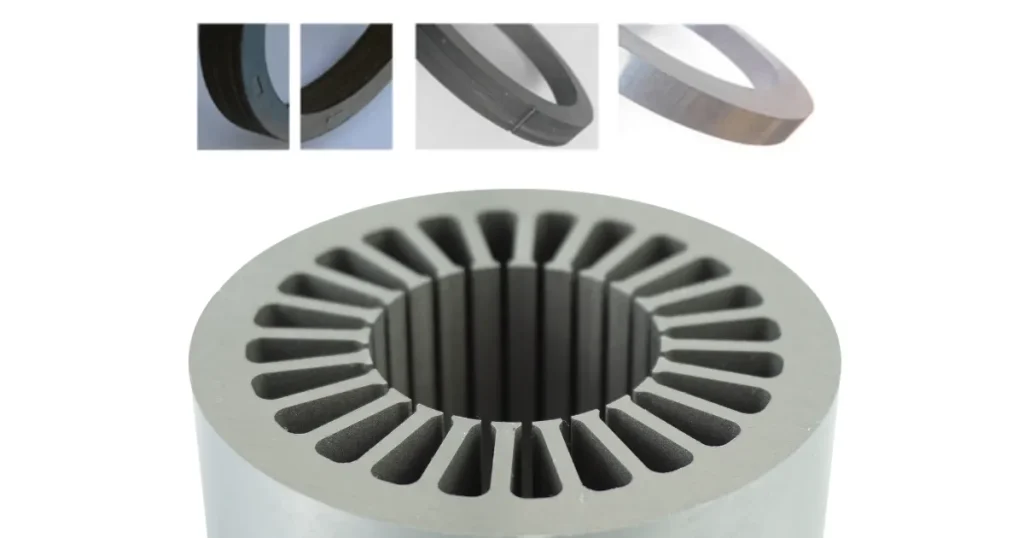
Huaci Technologies leverages the superior properties of 1J22 to manufacture high-performance rotors and stators for aerospace applications. These components are integral to aircraft generators, ensuring reliable operation under extreme conditions while maximizing efficiency and power density. Learn more about our motor core manufacturing capabilities.
Global Naming Conventions
Regional Names
These high-performance iron-cobalt-vanadium soft magnetic alloys are known by different names worldwide:
- China: Known as “1J22” or “Co50V2.”
- United States: Marketed as “Hiperco 50” or “Supermendur.”
- United Kingdom: Referred to as “Permendur.”
- Germany: Known as “Vacoflux 50.”
- France: Identified as “AFK502.”
- Russia: Called “50KФ.”
This regional naming reflects variations in industrial standards across countries.
Standards Compliance
Each alloy adheres to distinct national standards:
- 1J22: Governed by China’s GB/T15002 standard.
- Hiperco 50: Complies with ASTM A801 Alloy Type I (USA), MIL-A-47182, MIL-S-1907, MIL-S-1949A.
Historical Context
Hiperco 50 was initially developed by Carpenter Technology Corporation in the United States as a high-performance soft magnetic alloy. Over time, other countries created their own versions under different names but with similar compositions and performance characteristics.
China’s development of the GB/T15002 standard for soft magnetic alloys led to the creation of “1J22,” which closely mirrors Hiperco 50’s composition and performance. This explains why these two materials are often considered regional variants of the same product.
Related Materials
When selecting materials for motor and transformer applications, consider these related options:
- Electrical steel: Silicon steel remains the most common material for motor laminations, offering good magnetic properties at lower cost.
- Amorphous metals: Offer superior energy efficiency for transformer cores with 70-80% lower core losses.
- All materials: Explore our complete range of soft magnetic materials for various applications.
Conclusion
Hiperco 50 and 1J22 are essentially regional variations of the same high-performance iron-cobalt-vanadium soft magnetic alloy family. Their similarities include:
- Exceptional magnetic saturation (~2.4 Tesla).
- Comparable physical properties such as density and Curie temperature.
- Overlapping applications in aerospace, electronics, medical devices, etc.
The differences lie primarily in impurity control (more stringent for Hiperco 50) and adherence to regional manufacturing standards (ASTM vs GB/T). These alloys represent global advancements in soft magnetic materials tailored to meet specific industrial needs.
Frequently Asked Questions
Are Hiperco 50 and 1J22 the same material?
Hiperco 50 and 1J22 are essentially regional variants of the same iron-cobalt-vanadium soft magnetic alloy family. While their compositions and properties are very similar, they are manufactured under different standards—Hiperco 50 follows ASTM A801 (USA), while 1J22 adheres to GB/T15002 (China).
What are the key differences between Hiperco 50 and 1J22?
The main differences include:
- Impurity Control: Hiperco 50 has stricter impurity controls compared to 1J22.
- Cobalt and Vanadium Content: Hiperco 50 has slightly lower cobalt content and higher vanadium levels than 1J22.
- Manufacturing Standards: Each alloy follows its respective national standards, which may result in slight variations in processing and applications.
What are the primary applications of these alloys?
Both Hiperco 50 and 1J22 are used in:
- Aerospace (e.g., motor rotors, stators, magnetic bearings)
- Power electronics (e.g., transformers, electromagnetic pole heads)
- Medical devices (e.g., X-ray optics)
- Acoustic equipment (e.g., speakers, sensors)
- Magnetostrictive transducers and high-performance motors.
Can Hiperco 50 and 1J22 be used interchangeably?
Yes, in most cases, Hiperco 50 and 1J22 can be used interchangeably due to their similar properties. However, for applications requiring extremely tight tolerances or specific standards, material selection should consider the minor compositional differences.
Why do these alloys have different names globally?
The naming differences reflect regional industrial practices and standardization systems. For example:
- In the U.S., it is known as Hiperco 50 or Supermendur.
- In China, it is called 1J22.
- Other names include Permendur (UK), Vacoflux 50 (Germany), and 50КФ (Russia).
What makes these materials superior for magnetic applications?
Both alloys offer:
- High saturation magnetic induction (~2.4 Tesla).
- Low coercive force and high permeability.
- Excellent mechanical strength after heat treatment.
These properties make them ideal for compact, high-efficiency designs in motors, transformers, and other magnetic components.
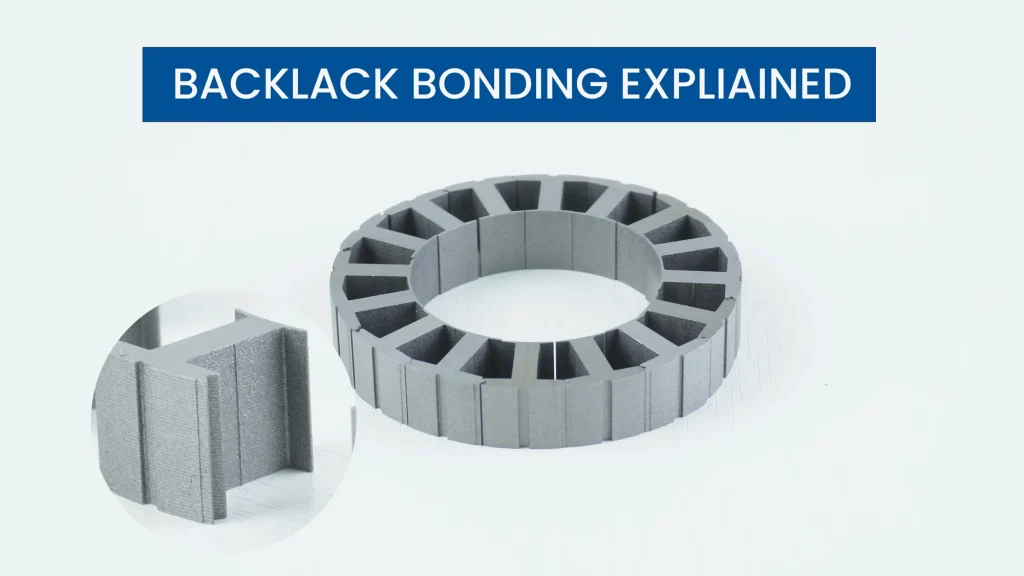
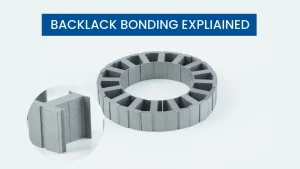
Learn more about materials for motor cores and how Huaci Technologies manufactures high-efficiency bonded lamination stacks for various applications.