Amorphous metals represent a fascinating frontier in materials science, combining unique structural properties with exceptional performance characteristics. This comprehensive guide explores their nature, production methods, distinctive properties, and wide-ranging applications across industries.
Key Takeaways
- Unique Structure: Amorphous metals have a disordered atomic structure, unlike crystalline metals, giving them exceptional strength and corrosion resistance.
- Superior Properties: They exhibit up to 2% elastic strain (10x conventional metals), tensile strength up to 1.9 GPa, and excellent magnetic characteristics.
- Manufacturing Challenges: Rapid cooling rates of millions of degrees per second are required, limiting component thickness.
- Key Applications: Transformer cores, medical implants, aerospace components, and high-end consumer products.
- Energy Efficiency: Amorphous metal transformers can reduce energy losses by 70-80% compared to silicon steel.
What Are Amorphous Metals?
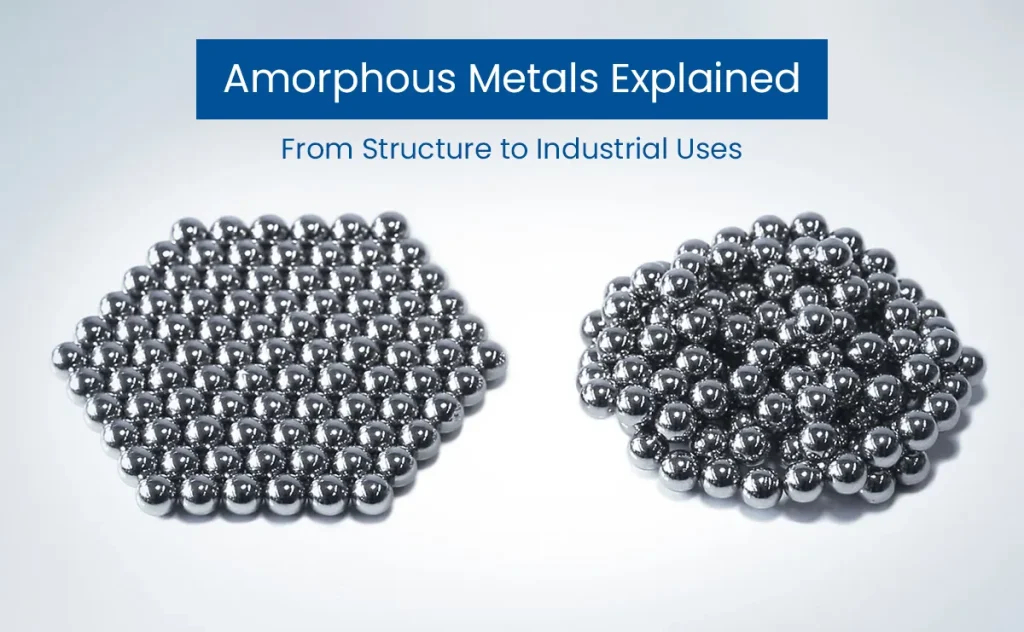
Amorphous metals, also known as metallic glasses or glassy metals, are solid metallic materials with a disordered atomic-scale structure that sets them apart from conventional metals. Unlike typical metals that form highly ordered crystalline structures during solidification, amorphous metals maintain a random arrangement of atoms similar to that of glass, hence their alternative name.
Definition and Basic Characteristics
An amorphous metal is a solid metallic material, usually an alloy, characterized by a non-crystalline, disordered atomic structure. This fundamental difference in atomic arrangement gives amorphous metals properties that differ significantly from their crystalline counterparts. While most metals naturally form crystalline structures during solidification, amorphous metals resist this ordering process, resulting in a material that combines metallic properties like good electrical conductivity and metallic luster with unique structural characteristics.
These materials typically consist of alloys rather than pure metals, often containing atoms of significantly different sizes. This size disparity contributes to their ability to maintain an amorphous state, as the varied atomic radii create a complex arrangement that resists crystallization.
Amorphous Metals vs. Metallic Glasses
The terms “amorphous metals” and “metallic glasses” are often used interchangeably, though subtle distinctions exist. Both refer to metals with disordered atomic structures, but the terminology emphasizes different aspects of these materials. “Amorphous metal” highlights the non-crystalline nature of the material while emphasizing its metallic composition, whereas “metallic glass” draws a parallel to the disordered structure found in conventional glass materials.
Unlike common glasses such as window glass, which are typically electrical insulators, amorphous metals maintain good electrical conductivity and exhibit metallic luster. This combination of glass-like structure with metallic properties creates a unique material category that bridges conventional classification boundaries.
Amorphous Metals vs. Crystalline Metals: Comparison Table
| Property | Amorphous Metals | Crystalline Metals |
|---|---|---|
| Atomic Structure | Disordered, non-crystalline | Ordered, crystalline lattice |
| Tensile Strength | Up to 1.9 GPa | 0.3-1.0 GPa (typical) |
| Elastic Strain Limit | ~2% | ~0.2% |
| Corrosion Resistance | Excellent (no grain boundaries) | Moderate (vulnerable at grain boundaries) |
| Magnetic Properties | Soft magnetic, low coercivity | Varies by composition |
| Core Loss (Transformers) | 70-80% lower than silicon steel | Standard baseline |
| Manufacturing Complexity | High (rapid cooling required) | Standard processes |
| Component Size | Limited (typically thin sections) | Unlimited |
| Cost | Higher | Lower |
How Are Amorphous Metals Manufactured?
The production of amorphous metals requires specialized techniques that prevent the natural crystallization process that occurs when most metals solidify. These manufacturing methods focus on rapidly cooling molten metal to “lock” atoms in a disordered state before they can arrange into crystalline structures.
Rapid Cooling and Quenching Techniques
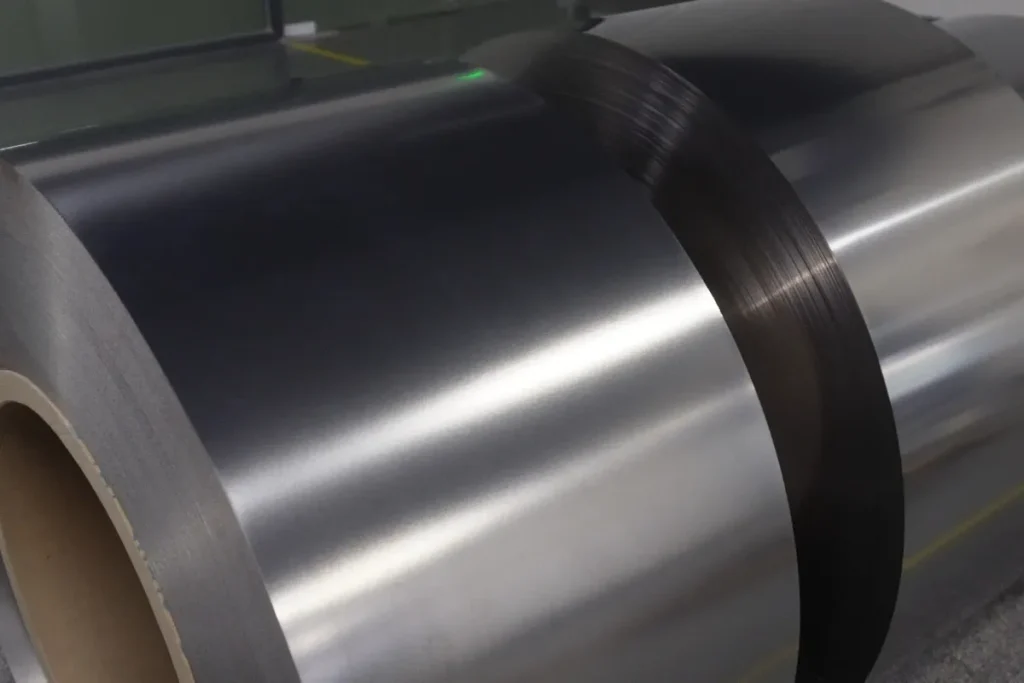
Amorphous metals are produced through several methods that share the common principle of extremely rapid cooling, typically at rates of millions of degrees Celsius per second. This rapid cooling prevents atoms from arranging themselves into ordered crystalline structures, effectively freezing them in a disordered, glass-like state.
Several techniques have been developed to achieve these extreme cooling rates:
- Melt spinning: One of the most common methods, where molten metal is ejected onto a rapidly rotating, cooled wheel. This process creates thin ribbons of amorphous metal as the material solidifies almost instantly upon contact with the cold surface.
- Splat quenching: A technique where molten metal is propelled at high velocity and “splattered” against a cooled copper surface, causing immediate solidification due to the increased surface area.
- Copper mold casting: For bulk metallic glasses, molten material is cast into copper molds that act as heat sinks, rapidly extracting heat from the alloy.
- 3D printing: More recent developments include metal additive manufacturing techniques that can produce amorphous metal components with complex geometries.
Challenges in Amorphous Metal Production
Manufacturing amorphous metals presents several significant challenges that impact their widespread adoption:
- Material selection and availability: Finding suitable combinations of elements that can form stable amorphous structures requires careful consideration.
- Size limitations: The requirement for rapid cooling restricts the thickness of amorphous metal components.
- Complex production processes: The fabrication involves multiple precise steps, including hot rolling, cold rolling, and stress relief annealing.
- Quality control: Maintaining consistent quality throughout production is challenging.
What Properties Make Amorphous Metals Unique?
Amorphous metals possess a remarkable combination of properties that distinguish them from conventional crystalline metals. These characteristics stem directly from their disordered atomic structure.
Mechanical Properties
- Superior strength: Tensile strength up to tenfold higher than crystalline counterparts. Specific alloys like Vitreloy 1 can reach tensile strengths of up to 1.9 GPa.
- Remarkable elasticity: Elastic strain up to 2%, compared to the typical 0.2% limit of crystalline metals.
- Low shrinkage during cooling: Minimal dimensional changes during solidification.
- Resistance to plastic deformation: Without defined slip planes, amorphous metals resist permanent deformation.
Corrosion and Wear Resistance
- Superior corrosion resistance: The absence of grain boundaries eliminates preferential sites for corrosion initiation.
- Enhanced wear resistance: The combination of high hardness and uniform structure makes amorphous metals highly resistant to mechanical wear.
- No need for protective coatings: The intrinsic corrosion resistance often eliminates the requirement for additional protective treatments.
Magnetic and Electrical Properties
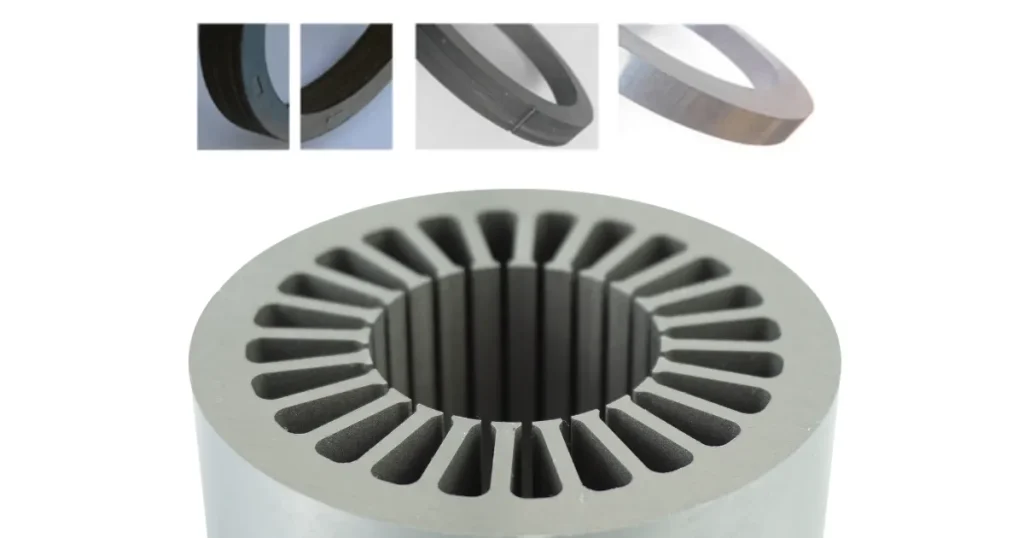
Amorphous metals possess unique electromagnetic characteristics that make them valuable for energy-efficient applications. Iron-based amorphous alloys, in particular, exhibit soft magnetic behavior with lower coercivity and core loss than crystalline iron, making them ideal for motor cores and transformer applications.
- Soft magnetic properties: Lower coercivity and core loss than crystalline iron.
- High magnetic permeability: Facilitates easy magnetization and demagnetization.
- Temperature-independent electrical resistance: Properties remain relatively stable across temperature ranges.
- High electrical resistance: Typically higher than crystalline counterparts.
Applications of Amorphous Metals Across Industries
The exceptional properties of amorphous metals have led to their adoption across diverse industries, where they offer performance advantages over conventional materials.
Electronics and Power Transmission
- Transformer cores: The low magnetic losses of amorphous metals make them ideal for distribution transformer cores, where they can reduce energy waste by 70-80% compared to conventional silicon steel.
- Magnetic shielding: High magnetic permeability makes them effective for shielding sensitive electronics.
- Inductors and magnetic sensors: The combination of high electrical resistance and favorable magnetic properties makes amorphous metals valuable components in various electronic devices.
- Electric vehicle components: Applications in motor cores and other EV-related components where energy efficiency is paramount.
Medical Devices and Implants
- Surgical instruments: High strength, wear resistance, and corrosion resistance make amorphous metals ideal for precision surgical tools.
- Implantable devices: Biocompatibility and mechanical properties that more closely match human tissue.
- Minimally invasive surgery tools: The ability to form amorphous metals into complex shapes while maintaining strength.
Aerospace and Defense Applications
- Structural components: High strength-to-weight ratio for aerospace applications.
- High-performance bearings: Wear resistance and mechanical properties for components under significant stress.
- Military armor: Energy absorption capabilities for protective applications.
- Precision positioning devices: The combination of strength and elasticity for high-precision components.
Consumer Products and High-End Audio
- High-end audio equipment: Premium headphone housings with exceptional acoustic properties.
- Luxury watches: Strength, wear resistance, and distinctive appearance.
- Sports equipment: Energy absorption and strength characteristics.
Related Materials for Motor Applications
Understanding amorphous metals is valuable when considering materials for specialized applications. For motor manufacturing, amorphous metals complement other soft magnetic materials:
- Soft magnetic alloys: Materials like 1J22 (Hiperco 50) offer high saturation magnetic induction for aerospace and high-performance applications.
- Electrical steel: Silicon steel remains the most common material for motor laminations, with various grades available for different applications.
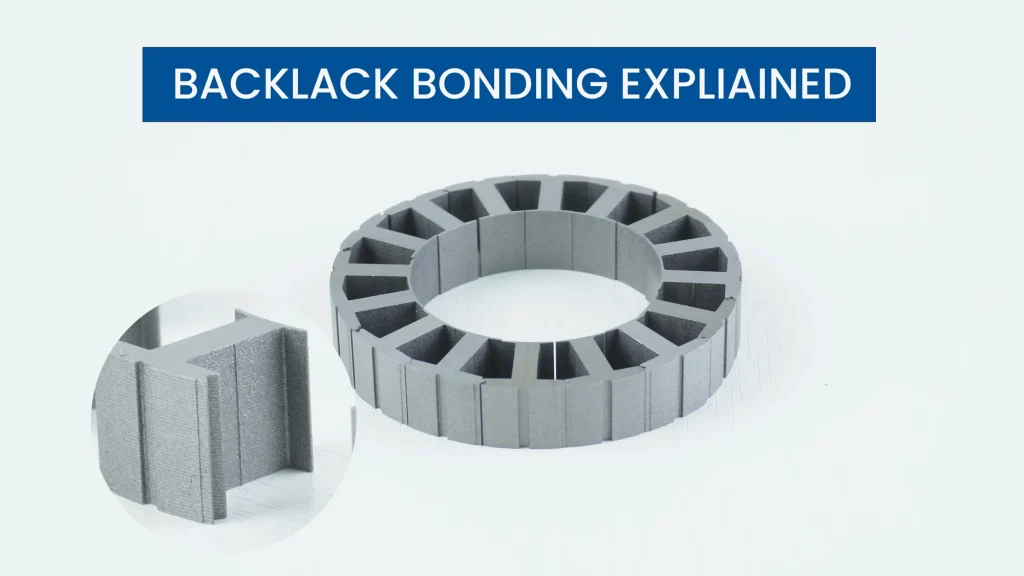
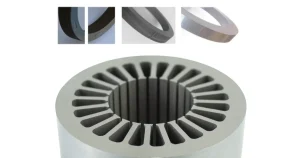
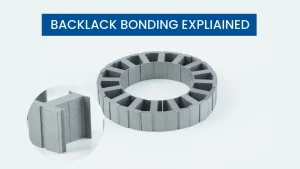
- Self-bonding laminations: Bonded motor cores using self-bonding technology offer superior efficiency compared to welded or riveted alternatives.
The Future of Amorphous Metals
As research continues and manufacturing techniques evolve, amorphous metals are poised to play an increasingly important role in addressing technological challenges:
- Energy efficiency improvements: Amorphous metal transformers can significantly reduce energy losses in power grids.
- Medical innovation: New approaches to implantable devices and surgical instruments.
- Aerospace advancements: Next-generation applications from commercial aviation to space exploration.
- Sustainable manufacturing: Extended product lifespans and energy-efficient production methods.
Conclusion
Amorphous metals represent a fascinating frontier in materials science, offering a unique combination of properties that stem directly from their disordered atomic structure. From their exceptional strength and elasticity to their superior corrosion resistance and distinctive magnetic characteristics, these materials provide solutions to engineering challenges across diverse industries.
The manufacturing of amorphous metals continues to evolve, with advances in rapid cooling techniques and bulk metallic glass production expanding the potential applications. While challenges remain in terms of cost, size limitations, and processing complexity, ongoing research and development efforts are steadily addressing these barriers.
Frequently Asked Questions
Are amorphous metals suitable for high-temperature applications?
Most amorphous metals have limited thermal stability and begin to crystallize at elevated temperatures, typically restricting their use to applications below 50-70% of their glass transition temperature. For high-temperature applications, consider soft magnetic alloys which maintain properties at elevated temperatures.
How do I determine if an amorphous metal is appropriate for my application?
Evaluate whether your application would benefit from the unique combination of high strength, elasticity, and corrosion resistance while considering size constraints, cost factors, and operating temperature requirements. Consult with materials engineers to assess suitability.
Can amorphous metals be joined to conventional materials?
Yes, amorphous metals can be joined to conventional materials through techniques including laser welding, diffusion bonding, and specialized adhesives, though care must be taken to avoid crystallization in the heat-affected zone.
Why are amorphous metals used in transformer cores?
Amorphous metals have significantly lower core losses than conventional silicon steel, reducing energy waste by 70-80% in distribution transformers. This makes them ideal for energy-efficient power distribution systems.
What is the difference between amorphous metals and nanocrystalline materials?
Amorphous metals have no long-range atomic order, while nanocrystalline materials contain extremely small crystalline grains (typically 10-100 nm). Both offer excellent soft magnetic properties, but nanocrystalline materials can achieve higher saturation magnetization.
Learn more about materials for motor cores and how Huaci Technologies manufactures high-efficiency bonded lamination stacks for various applications.