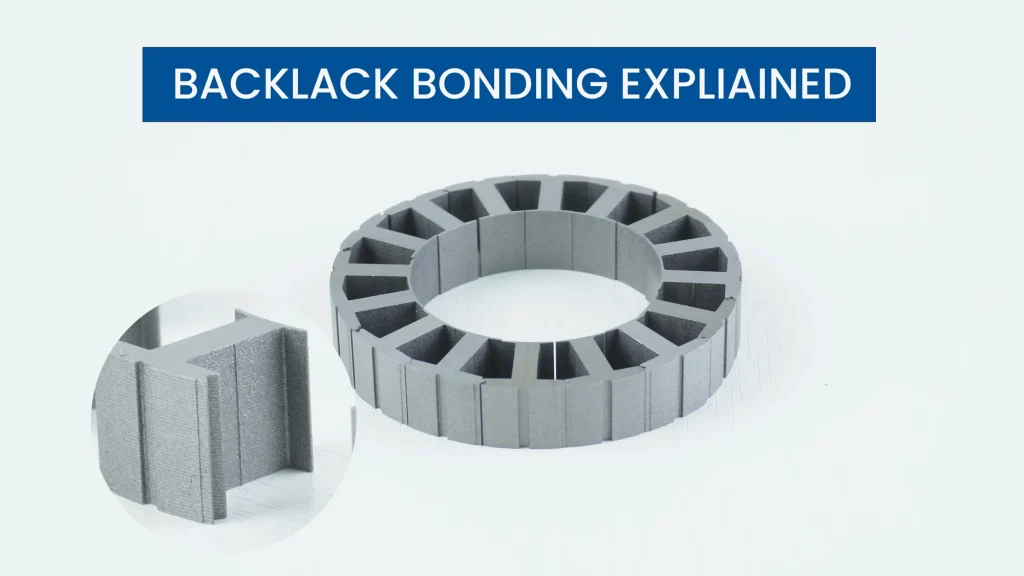
Backlack bonding represents a revolutionary advancement in motor lamination technology, offering superior efficiency and performance compared to traditional methods like welding or mechanical interlocking. This comprehensive guide explores the backlack bonding process, its advantages, and why it’s becoming the preferred choice for high-performance motor cores.
Key Takeaways
- Superior Efficiency: Backlack bonding significantly reduces eddy current losses compared to welding, improving motor efficiency by eliminating heat-damaged zones.
- Clean Process: Unlike welding, backlack bonding introduces no foreign materials and doesn’t damage the electrical properties of the steel laminations.
- Enhanced Strength: The uniform adhesive bond creates a mechanically stronger core with better vibration resistance and thermal management.
- Design Flexibility: Backlack bonding enables complex motor core designs that would be impossible with traditional welding or riveting methods.
- Cost-Effective: While initial investment is higher, the improved performance and longevity result in lower total cost of ownership.
What is Backlack Bonding?
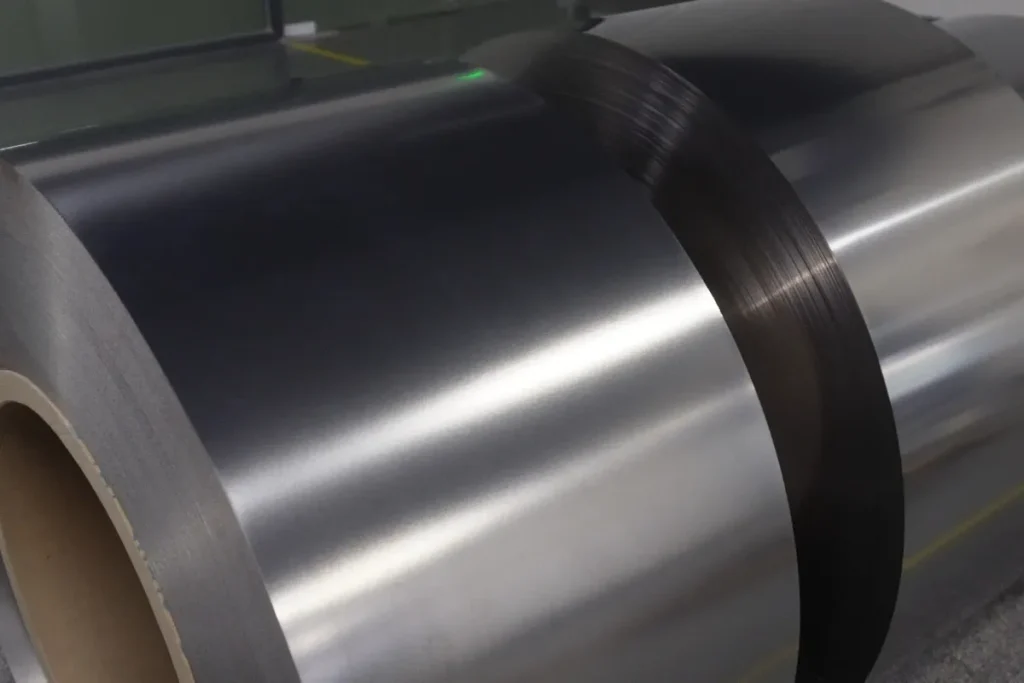
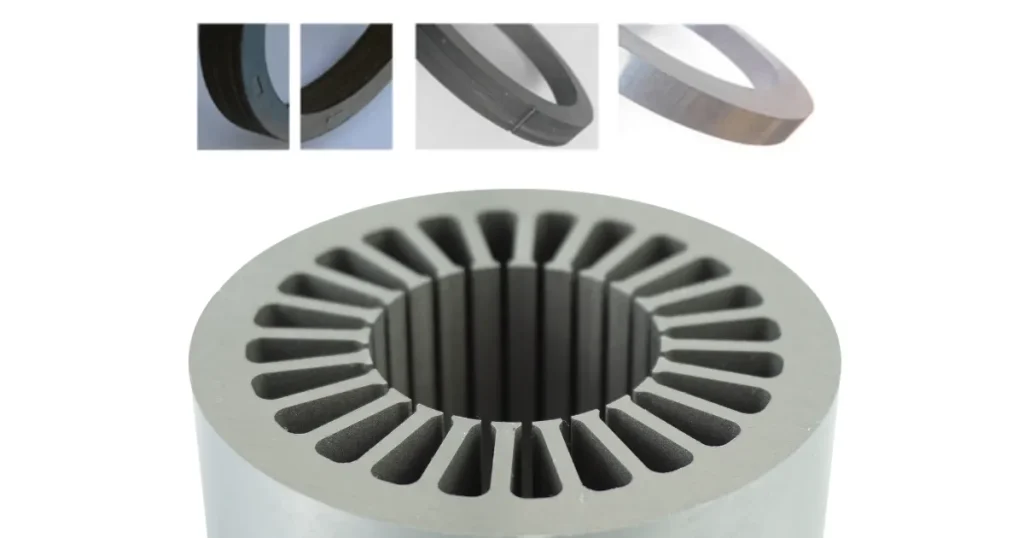
Backlack, short for “back-applied lacquer,” is a self-bonding coating technology that revolutionizes how motor laminations are joined. The concept is elegantly simple: a special coating is applied to electrical steel sheets before stacking. When heated under pressure, this coating transforms into a strong adhesive bond, creating a unified motor core without the drawbacks of traditional methods.
Motor laminations are thin sheets of electrical steel that, when stacked together, form the core of the motor’s stator and rotor. The bonding method plays a critical role in the motor’s efficiency, durability, and performance. Traditional methods like welding and mechanical interlocking each had significant limitations that backlack bonding overcomes.
Backlack Bonding vs. Traditional Methods: Comparison Table
| Method | Eddy Current Losses | Mechanical Strength | Design Flexibility | Cost |
|---|---|---|---|---|
| Backlack Bonding | Lowest | Excellent (uniform) | High | Medium (lower TCO) |
| Welding | High (heat damage) | Good (localized) | Limited | Low initial |
| Riveting | Medium | Good | Limited | Low |
| Mechanical Interlocking | Low | Good | Very Limited | Low |
| Glue Joining | Low | Variable | Medium | Low |
Traditional Bonding Methods: Limitations
Before backlack technology, motor manufacturers relied on several methods, each with significant drawbacks:
Welding
Welding was a popular choice for years, but the heat from welding could damage the delicate electrical properties of the steel, leading to increased energy losses.
- Pros: Strong bond, familiar technology
- Cons: Heat damage to electrical properties, increased eddy current losses, potential for distortion
Mechanical Interlocking
Think of this as creating a jigsaw puzzle out of metal sheets. While it avoided heat issues, it often required additional manufacturing steps and could introduce stress points.
- Pros: No heat damage, good mechanical strength
- Cons: Complex manufacturing process, potential stress points, limited design flexibility
Riveting
Riveting uses metal fasteners to hold laminations together, creating localized stress points and potential paths for eddy currents.
- Pros: Strong mechanical connection, established process
- Cons: Creates stress concentrations, adds weight, limited to specific locations
The Backlack Bonding Process
The backlack bonding process is a precisely choreographed sequence of steps:
Step 1: Coating Application
The journey begins with applying the backlack coating to electrical steel sheets using a roll coating process, ensuring an even layer on both sides of each lamination.
Step 2: Initial Curing
The coated laminations undergo an initial curing process that sets the coating just enough to handle, but leaves it reactive for the final bonding stage.
Step 3: Cutting and Shaping
The partially cured laminations are cut and shaped into the desired form for the motor core using stamping, laser cutting, or other precision methods.
Step 4: Stacking
The shaped laminations are carefully stacked in the required configuration, placed in a special fixture that ensures perfect alignment and applies the right amount of pressure.
Step 5: Final Curing
Under carefully controlled heat and pressure, the backlack coating fully cures, transforming from a simple coating into a strong, durable bond.
Step 6: Quality Control
The bonded core undergoes rigorous testing including electrical tests, mechanical strength tests, and dimensional checks.
Learn more about our bonded motor core manufacturing capabilities.
Advantages of Backlack Bonding
1. Improved Efficiency
Backlack bonding significantly reduces eddy current losses compared to traditional methods. The motor can perform at its peak with less wasted energy, directly translating to better overall efficiency.
2. Enhanced Mechanical Strength
The uniform bonding provided by backlack creates a core that’s stronger and more resistant to vibration. The entire lamination stack acts as a unified structure rather than sheets held at discrete points.
3. Better Thermal Management
Backlack bonded cores often show improved heat dissipation properties. The uniform bonding helps distribute thermal energy more evenly throughout the core.
4. Increased Design Flexibility
Without the constraints of traditional bonding methods, engineers have more freedom to innovate with complex geometries and optimized designs.
5. Reduced Noise and Vibration
The uniform bonding helps dampen vibrations, leading to quieter motor operation—a critical factor in many applications.
6. Improved Corrosion Resistance
The backlack coating provides an additional layer of protection against environmental factors, extending the motor’s operational life.
Applications of Backlack Bonded Motor Cores
Backlack bonding is particularly valuable in applications demanding high efficiency and reliability:
- Electric Vehicles: Higher efficiency translates directly to extended range. See our eVTOL and EV applications.
- Industrial Motors: Reduced energy consumption and longer service life for manufacturing equipment.
- Aerospace: Critical for aircraft generators and auxiliary power units where weight and efficiency are paramount.
- Precision Instruments: Quiet operation and reliability for medical devices and scientific equipment.
Challenges and Considerations
While backlack bonding offers significant advantages, manufacturers should consider:
- Initial Investment: Implementing backlack bonding may require new equipment and processes.
- Process Control: The bonding process requires precise control of temperature, pressure, and timing.
- Material Compatibility: Not all electrical steels work equally well with backlack bonding.
- Quality Control: Ensuring consistent bond quality across large production runs requires robust processes.
Future Trends in Motor Lamination Bonding
- Advanced Coating Materials: New backlack formulations offering better electrical and thermal properties.
- Automation and AI: Smart factories optimizing the bonding process in real-time.
- Sustainability Focus: Bio-based backlack materials and energy-efficient curing methods.
- Miniaturization: Backlack bonding enabling micro-motors for medical devices and tiny drones.
Conclusion
Backlack bonding represents a significant leap forward in motor lamination technology, offering improved efficiency, durability, and design flexibility compared to traditional methods. While challenges remain, the advantages of this innovative bonding method are driving its adoption across the motor manufacturing industry.
For applications requiring the highest levels of efficiency and reliability, backlack bonded motor cores offer compelling advantages that justify the investment in this advanced technology.
Frequently Asked Questions
What is the difference between backlack bonding and welding?
Backlack bonding uses a heat-activated adhesive coating to bond laminations uniformly, while welding uses localized heat to fuse edges. Backlack bonding doesn’t damage the electrical properties of the steel and provides more uniform bonding, resulting in lower eddy current losses and better efficiency.
Is backlack bonding suitable for all motor types?
Backlack bonding is suitable for most motor types, especially those requiring high efficiency. It’s particularly beneficial for electric vehicle motors, aerospace applications, and precision instruments where efficiency and quiet operation are critical.
How does backlack bonding improve motor efficiency?
Backlack bonding eliminates the heat-affected zones created by welding that increase eddy current losses. The uniform adhesive bond also provides better insulation between laminations, further reducing losses. This can improve motor efficiency by several percentage points.
What materials are compatible with backlack bonding?
Most electrical steel grades can be used with backlack bonding, including silicon steel and some soft magnetic alloys. Material compatibility should be verified with the coating supplier.
How long does the backlack bonding process take?
The complete process includes coating application, initial curing, cutting, stacking, and final curing. Final curing typically takes 1-3 hours depending on the stack size and coating formulation. The total cycle time is competitive with traditional methods when considering the elimination of secondary operations.
Learn more about motor core manufacturing and how Huaci Technologies can help optimize your motor designs with advanced bonding technology.