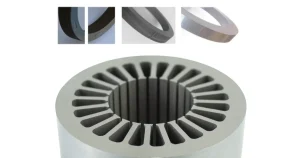
Not all motor core manufacturers can meet the demands of hydrogen fuel cell air compressors. At ultra-high speeds (100,000–150,000 rpm), even minor lamination imperfections cause significant efficiency losses. This guide explains the technical requirements—and how to select a partner who can actually deliver.
1. Why Motor Cores Are Critical in Fuel Cell Systems
A hydrogen fuel cell system is essentially an electrochemical power generator that combines hydrogen and oxygen to produce electricity, with water as the only emission. But here’s what most engineers overlook: the air compressor is the largest parasitic load in the entire system.
Fuel cells require compressed air—not just for combustion, but to drive the electrochemical reaction. The compressor must:
- Supply air at 2–3 bar pressure to the fuel cell stack
- Operate across a wide speed range (30,000–150,000 rpm)
- Respond to transient load changes within milliseconds
- Run continuously for 20,000+ hours with minimal maintenance
According to research, the air supply system consumes 20–30% of total fuel cell output power [1]. This means: every 1% improvement in motor efficiency translates to roughly 0.2–0.3% improvement in overall system efficiency.
For a 100 kW fuel cell system, that 0.2–0.3% represents 200–300 watts of continuous savings—year after year.
The motor core is the heart of this system. It determines efficiency, reliability, and lifespan. Choose the wrong core, and your entire fuel cell system suffers.
2. Technical Requirements: What Sets Fuel Cell Compressor Motors Apart
2.1 Speed and Frequency Demands
| Application | Operating Speed | Electrical Frequency | Power Range |
|---|---|---|---|
| Automotive FCS | 80,000–100,000 rpm | 1,333–1,667 Hz | 5–20 kW |
| Aviation FCS | 100,000–150,000 rpm | 1,667–2,500 Hz | 30–250 kW |
| Stationary FCS | 50,000–80,000 rpm | 833–1,333 Hz | 20–100 kW |
At these extreme frequencies, eddy current losses increase with the square of the frequency. This makes lamination thickness the single most critical material selection factor.
2.2 Material Selection: The Thickness Imperative
| Material Grade | Thickness | Core Loss (1.0T/400Hz) |
|---|---|---|
| 35JNEX900 | 0.35mm | 13.5 W/kg |
| 20JNEX900 | 0.20mm | 8.5 W/kg |
| 10JNEX900 | 0.10mm | 4.5 W/kg |
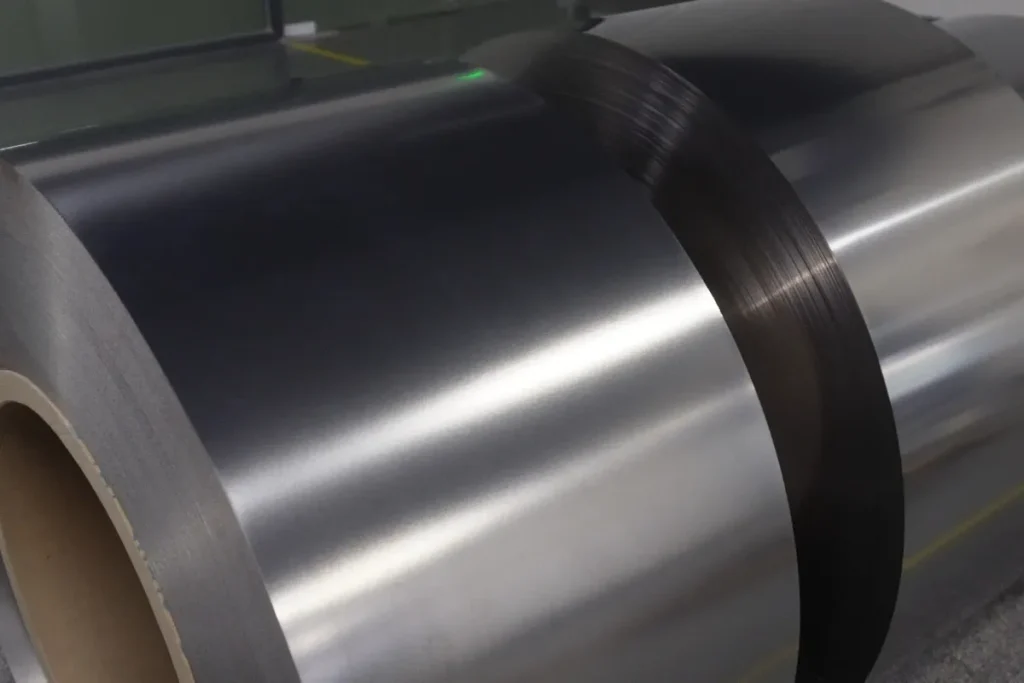
| FeCoV Alloy | 0.10–0.20mm | 2.5–3.5 W/kg |
Key insight: Reducing lamination thickness from 0.35mm to 0.10mm reduces eddy current losses by approximately 65%. For fuel cell compressors running at 100,000+ rpm, this isn’t optional—it’s mandatory.
3. Manufacturing Methods: Why Process Matters
| Method | Tolerance | Eddy Current Path | Mechanical Integrity | Recommended For |
|---|---|---|---|---|
| Riveting | ±0.1mm | High (metal-to-metal) | Good | Low-cost applications |
| Welding | ±0.15mm | Medium (local shorts) | Degraded by HAZ | Non-critical use |
| Interlocking | ±0.08mm | Medium | Variable | Medium volume |
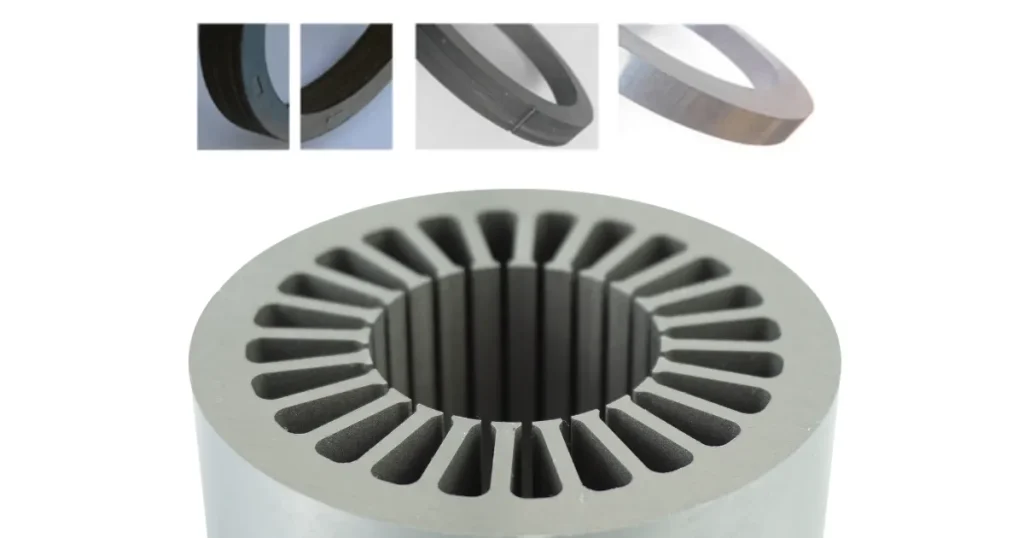
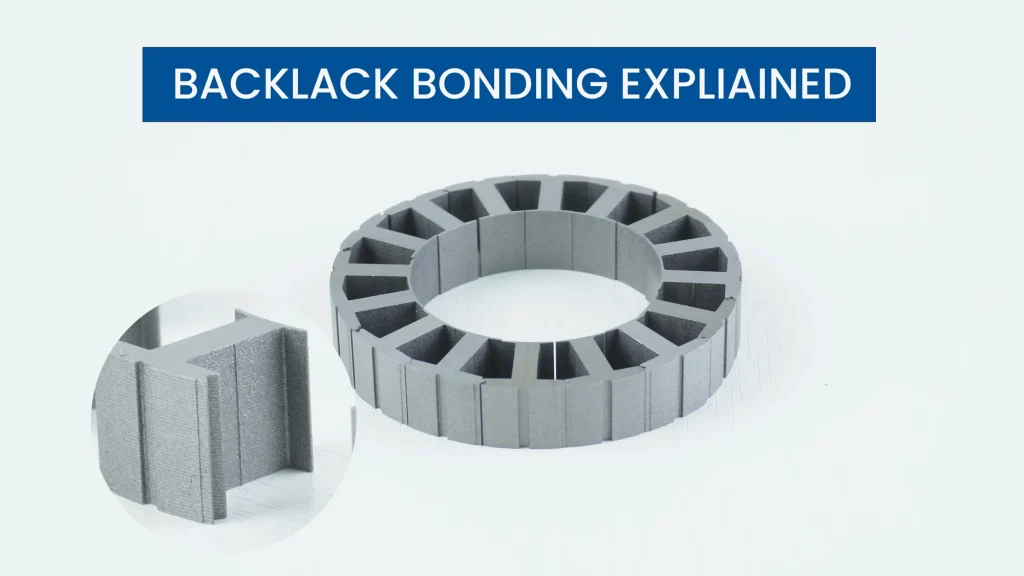
| Self-Bonding | ±0.05mm | Minimal (full insulation) | Superior | High-performance |
Why self-bonding wins for fuel cell compressors:
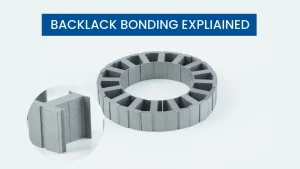
- Full-surface epoxy coating eliminates eddy current paths between laminations
- Uniform compression across entire core cross-section
- Superior thermal conductivity (heat dissipates evenly)
- No mechanical deformation from welding or riveting
- Zero gap tolerance—critical for high-frequency operation
4. Huaci Technologies: Your Specialized Motor Core Partner
We’ve served 300+ global customers across automotive, aerospace, robotics, and hydrogen fuel cell industries. Our expertise in ultra-thin lamination processing sets us apart.
4.1 Our Manufacturing Capabilities
| Capability | Specification |
|---|---|
| Minimum lamination thickness | 0.05mm (ultra-thin for aerospace) |
| Minimum core diameter | 4mm (micro motors) |
| Maximum stack height | 200mm+ |
| Dimensional tolerance | ±0.03mm (precision demanding) |
| Bonding method | Full-surface Backlack epoxy |
| Process | Laser cutting + online curing |
| Industry experience | 10+ years |
| Minimum order | 1 piece (prototypes welcome) |
4.2 Certifications That Matter
- IATF 16949 — Automotive quality management
- ISO 9001 — General quality management
- Full traceability from raw material to finished core
- CMM inspection and process stability control
For fuel cell system manufacturers, these certifications mean: consistent quality, reliable supply chains, and compliance with international automotive standards.
4.3 Prototyping to Production
| Phase | Lead Time | Process |
|---|---|---|
| Rapid prototype | 2–4 weeks | Laser cutting / wire EDM |
| Production | 4–8 weeks | Continuous stamping + online curing |
4.4 Why Customers Choose Huaci
- Self-bonding specialists — We focus exclusively on adhesive-bonded laminations, not riveted or welded cores
- Ultra-thin expertise — 0.05mm and 0.10mm lamination processing capability
- Fast prototyping — 2-4 week prototype lead time
- Global compliance — IATF 16949 certified for automotive supply chains
- Flexible volumes — From 1 piece to production
5. Future Trends: What’s Next for Fuel Cell Motors
Three developments will shape fuel cell compressor motor design:
- Integrated motor-compressors — Eliminating mechanical couplings, reducing size and weight
- Magnetic bearing integration — Zero-friction operation at 150,000+ rpm
- Wide-bandgap inverters — SiC/GaN electronics enabling higher frequencies
These trends demand even tighter manufacturing tolerances and thinner laminations—capabilities Huaci is investing in today.
Conclusion
Fuel cell air compressor motor cores represent one of the most demanding applications in electrical engineering. Success requires:
- Ultra-thin laminations (0.10mm or less)
- Self-bonding process for minimal losses
- Precision manufacturing with ±0.03mm tolerance
- IATF 16949-certified quality systems
Huaci Technologies brings 10+ years of soft magnetic material expertise to your fuel cell motor projects. From rapid prototypes to high-volume production, we deliver motor cores optimized for ultra-high-speed operation.
Ready to Optimize Your Fuel Cell Motor?
Get expert guidance on material selection, lamination thickness, and manufacturing process for your specific application.
→ Request Free Technical Consultation
Or download our motor core specification sheet to compare options offline.
References
- [1] ScienceDirect, “Review of recent developments in fuel cell centrifugal air compressor,” International Journal of Hydrogen Energy, 2023.
- [2] Springer, “Design of ultra-high speed centrifugal air compressor for hydrogen fuel cell aircraft,” IJIDeM, 2025.
- [3] MDPI, “Design and Optimization of Magnetic Levitation Air Compressor for Fuel Cells,” Actuators, 2025.