Key Takeaways
- NO10 electrical steel is the thinnest commercially available non-oriented electrical steel at just 0.10 mm thickness, enabling exceptional high-frequency performance.
- Core loss at 400 Hz is only 11.0 W/kg (typical), making it ideal for EV motors, aerospace systems, and high-frequency transformers.
- Despite its ultra-thin profile, NO10 maintains high mechanical strength with minimum yield strength of 330 MPa.
- NO10 offers 20-30% lower core losses compared to NO20 at high frequencies, justifying its premium price for demanding applications.
- Primary applications include high-speed EV traction motors, aerospace electrical systems (400 Hz), and compact power electronics.
In the rapidly evolving world of electromagnetic device design, NO10 electrical steel stands at the cutting edge of material technology. At just 0.10 mm thick—this ultra-thin non-oriented electrical steel enables unprecedented efficiency in high-frequency applications where performance is paramount.
As industries push toward electrification and higher energy efficiency standards, NO10 electrical steel delivers the exceptional magnetic properties needed for next-generation devices. This technical guide examines NO10 electrical steel’s specifications, manufacturing processes, applications, and comparative advantages—providing engineers with the essential knowledge to determine when and how to leverage this premium material for optimal electromagnetic device performance.
What is NO10 Electrical Steel?
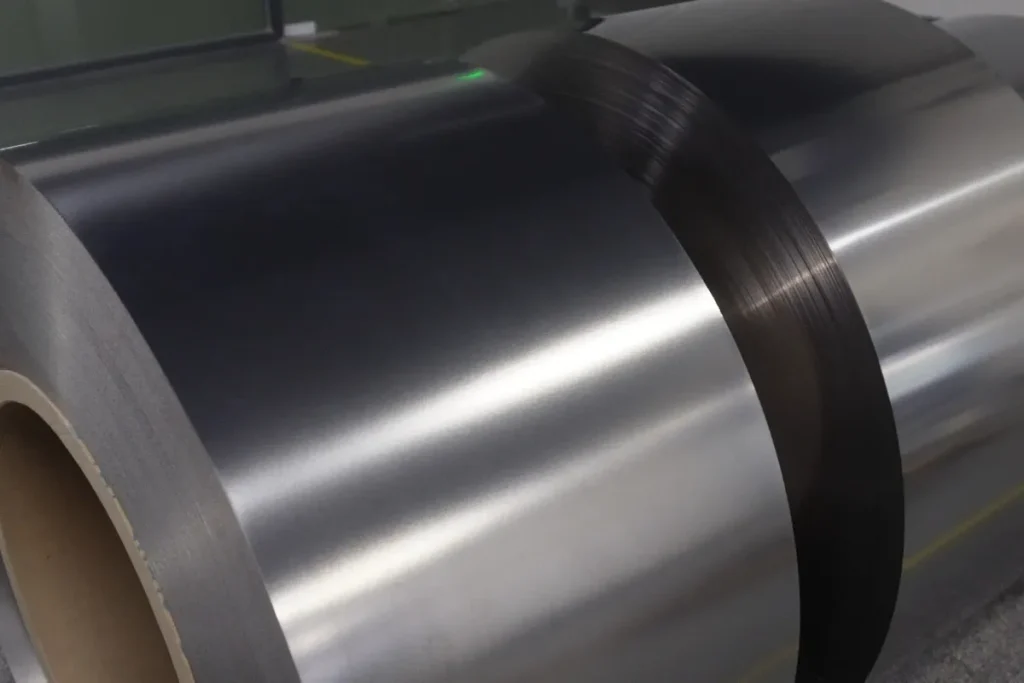
NO10 electrical steel is an ultra-thin non-oriented electrical steel with a nominal thickness of 0.10 mm (0.004 inches). It belongs to the premium category of non-oriented electrical steels (NOES) that are specifically designed for high-frequency applications where efficiency and performance are critical factors. The designation “NO10” follows the industry standard naming convention where “NO” indicates non-oriented electrical steel and “10” refers to its thickness in hundredths of a millimeter.
Classification Within Non-Oriented Electrical Steel Family
NO10 sits at the thinnest end of the non-oriented electrical steel spectrum, which typically ranges from 0.10 mm to 0.65 mm in thickness. Within the electrical steel classification system, NO10 falls under the ultra-thin category as defined by international standards EN 10303:2015 and IEC 60404-8-8:2017. The specific grade designation often includes additional information about performance characteristics, such as in the case of “NO10-1270N,” where “1270” indicates the maximum core loss at 1.0 T and 400 Hz (12.7 W/kg), and “N” denotes the standard strength category.
Non-oriented electrical steels like NO10 are characterized by their isotropic magnetic properties, meaning they exhibit relatively uniform magnetic behavior in all directions. This makes them ideal for applications where magnetic flux changes direction frequently, such as in electric motors and generators, unlike grain-oriented electrical steels which are optimized for unidirectional magnetic flux.
Key Distinguishing Features of Ultra-Thin NO10 Grade
The primary distinguishing feature of NO10 electrical steel is its ultra-thin gauge of 0.10 mm, which enables exceptional performance at high frequencies. This extreme thinness significantly reduces eddy current losses, which increase exponentially with material thickness, especially at higher frequencies.
NO10 grade offers a unique combination of:
- Exceptional high-frequency performance with typical core loss of 11.0 W/kg at 1.0 T and 400 Hz
- Superior magnetic properties with minimum peak magnetic polarization of 1.52 T at 2500 A/m
- High mechanical strength (minimum yield strength of 330 MPa) despite its thin profile
- Excellent performance in applications operating at frequencies from 400 Hz to 10,000 Hz
As the thinnest commercially available grade in the non-oriented electrical steel family, NO10 represents the cutting edge of electrical steel technology, enabling the development of more compact, efficient, and high-performance electromagnetic devices, particularly in sectors where size and weight constraints are critical considerations.
Technical Specifications of NO10 Electrical Steel
NO10 electrical steel offers a comprehensive set of technical specifications that make it suitable for high-performance electromagnetic applications. These specifications encompass magnetic, physical, and mechanical properties that collectively determine its performance in real-world applications.
Magnetic Properties and Core Loss Data
The magnetic properties of NO10 electrical steel are its most critical characteristics, particularly for high-frequency applications. The grade NO10-1270N, a common variant, demonstrates exceptional performance across various frequency ranges:
Core Loss Data at 1.0 T:
- 50 Hz: 1.10 W/kg (typical value)
- 400 Hz: Maximum 12.7 W/kg (guaranteed), 11.0 W/kg (typical)
- 700 Hz: Maximum 23.6 W/kg (guaranteed), 21.6 W/kg (typical)
- 2500 Hz: 123 W/kg (typical)
- 5000 Hz: Approximately 300 W/kg
- 10000 Hz: Approximately 900 W/kg
Magnetic Polarization:
- At 2500 A/m and 50 Hz: Minimum 1.52 T (guaranteed), 1.56 T (typical)
- At 5000 A/m and 50 Hz: Minimum 1.63 T (guaranteed), 1.66 T (typical)
- At 10000 A/m and 50 Hz: Minimum 1.76 T (guaranteed), 1.79 T (typical)
These values demonstrate NO10’s exceptional performance at high frequencies, making it ideal for applications where efficiency at frequencies above 400 Hz is critical.
Physical Properties
The physical properties of NO10 electrical steel contribute significantly to its overall performance:
- Density: 7.65 kg/dm³ (assumed value)
- Electrical Resistivity at 23°C: 51 μΩ·cm (typical)
- Thermal Conductivity at 23°C: 23 W/(m·K) (typical)
- Thermal Expansion (0-100°C): 12·10⁻⁶ /°C (typical)
Mechanical Properties
Despite its ultra-thin profile, NO10 electrical steel maintains impressive mechanical properties that ensure durability and ease of processing:
- Yield Strength (Rp0.2): Minimum 330 MPa (guaranteed), 370 MPa (typical) in the rolling direction
- Tensile Strength (Rm): Minimum 430 MPa (guaranteed), 470 MPa (typical) in the rolling direction
- Elongation at Fracture (A80): Minimum 14% (guaranteed), 19% (typical)
- Young’s Modulus: 190 GPa (typical)
The combination of these technical specifications makes NO10 electrical steel an exceptional material for high-performance electromagnetic applications, particularly those operating at high frequencies where efficiency and power density are paramount considerations.
Manufacturing Process and Challenges
The production of NO10 electrical steel represents one of the most challenging manufacturing processes in the steel industry, requiring precise control at every stage to achieve the ultra-thin 0.10 mm thickness while maintaining exceptional magnetic and mechanical properties.
Production Methods for Ultra-Thin Electrical Steel
The manufacturing process for NO10 electrical steel follows a complex sequence of operations that must be executed with extreme precision:
- Steel Refining and Melting: The process begins with careful selection and refining of raw materials to achieve the precise chemical composition required for electrical steel, particularly the silicon content which typically ranges from 1-6.5%.
- Hot Rolling: Refined steel slabs are rolled at high temperatures into heavy gauge coils, typically several millimeters thick.
- Acid Pickling: The hot-rolled coils undergo acid pickling to remove surface scale and prepare them for cold rolling.
- Cold Rolling: This critical step reduces the steel to its final ultra-thin gauge of 0.10 mm. For NO10, this represents an extreme reduction ratio, requiring multiple passes through precision rolling mills.
- Annealing: The cold-rolled material undergoes a precisely controlled annealing process, typically in a continuous furnace at approximately 850°C in a hydrogen-nitrogen atmosphere.
- Insulation Coating: A thin insulating layer is applied to both surfaces of the steel, providing electrical insulation between laminations.
The production of ultra-thin grades like NO10 requires specialized equipment and expertise that only a limited number of manufacturers worldwide possess, making it a premium product with limited availability compared to thicker grades.
Applications of NO10 Electrical Steel
NO10 electrical steel’s exceptional combination of ultra-thin gauge and superior magnetic properties makes it ideally suited for advanced applications where high efficiency, compact size, and performance at elevated frequencies are critical requirements.
Electric Vehicle Motors and Drives
NO10 electrical steel plays a crucial role in the development of next-generation electric vehicle (EV) propulsion systems:
- High-Speed Traction Motors: The ultra-thin 0.10 mm gauge significantly reduces eddy current losses in high-speed motors operating at elevated frequencies.
- Extended Range: The superior efficiency of motors using NO10 electrical steel directly translates to extended driving range for EVs.
- Power Density Optimization: NO10’s excellent magnetic properties enable the design of more compact motors with higher power density.
- Noise Reduction: Advanced electrical steel like NO10 can reduce motor noise by approximately 5dB compared to conventional grades.
High-Efficiency Transformers
While grain-oriented electrical steel is traditionally used for transformers, NO10 offers compelling advantages for specific transformer applications:
- High-Frequency Transformers: In power electronics applications where transformers operate at frequencies above 400 Hz, NO10’s low high-frequency losses provide significant efficiency improvements.
- Compact Power Supplies: The exceptional performance of NO10 at high frequencies enables the design of smaller, lighter transformers.
- Weight Reduction: Using ultra-thin electrical steel like NO10 can reduce transformer weight and volume by up to 25% compared to conventional materials.
Specialized High-Frequency Applications
- Aerospace Systems: In aircraft electrical systems operating at 400 Hz, NO10 provides significant efficiency improvements and weight reduction.
- Military Equipment: Defense applications requiring high reliability benefit from NO10’s superior magnetic and mechanical properties.
- Medical Devices: Diagnostic and therapeutic medical equipment benefit from the precision and efficiency of NO10 electrical steel.
- High-End Audio Equipment: Premium audio transformers using NO10 can achieve superior frequency response and lower distortion.
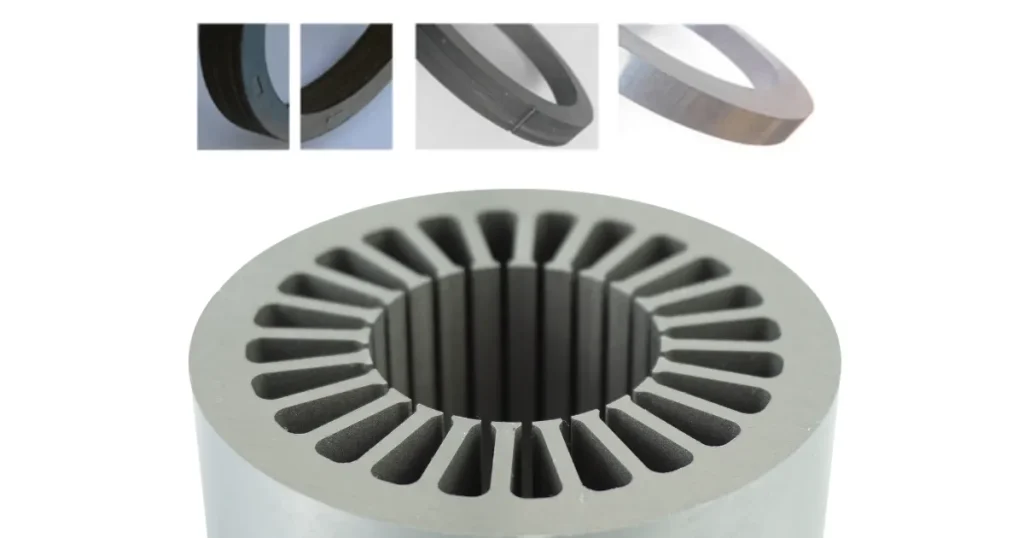
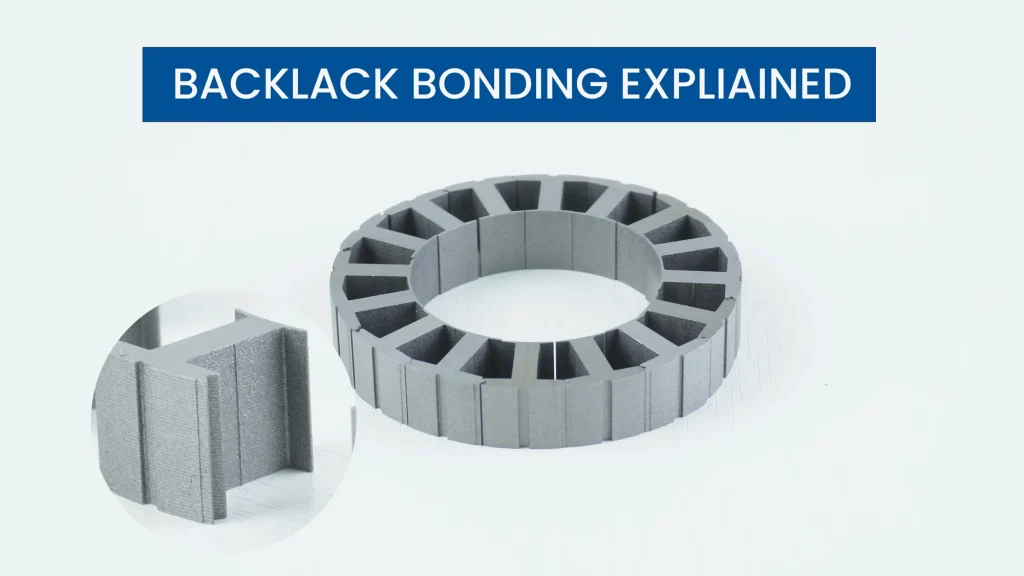
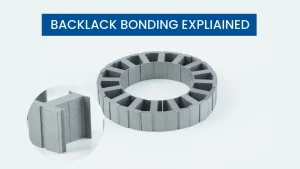
At Huaci Technologies, our self-bonded core solutions eliminate stress concentrations and magnetic losses from traditional welding and riveting. Working with 0.10mm material for aerospace applications, our bonding process preserves magnetic properties while enhancing structural integrity.
Comparative Analysis with Other Electrical Steel Grades
Understanding how NO10 electrical steel compares to other grades is essential for engineers and designers to make informed material selections.
NO10 vs NO15 vs NO20 Comparison Table
| Property | NO10 | NO15 | NO20 |
|---|---|---|---|
| Thickness | 0.10 mm | 0.15 mm | 0.20 mm |
| Core Loss @ 400Hz, 1.0T | 11.0 W/kg | 14.0 W/kg | 13.0-15.0 W/kg |
| Core Loss @ 1000Hz, 1.0T | ~35 W/kg | ~50 W/kg | 48-55 W/kg |
| Yield Strength | 330 MPa | 330 MPa | 320-350 MPa |
| Best For | Ultra-high frequency | High frequency | Medium-high frequency |
| Cost Level | Premium | High | Standard |
NO10 vs NO20: When to Choose Each Grade
Choose NO10 when:
- Maximum efficiency at high frequencies is the primary concern
- Space and weight constraints are extremely tight
- The application operates at very high frequencies (>1000 Hz)
- The efficiency gains justify the premium price
Choose NO20 when:
- Cost-effectiveness is important
- Moderate frequencies are involved
- Manufacturing considerations favor the more robust thickness
For many commercial applications, NO20 represents the sweet spot between performance and cost, while NO10 serves the premium segment where performance requirements are paramount. For more details, see our NO20 Electrical Steel Guide.
NO10 vs Grain-Oriented Electrical Steel
- NO10 offers isotropic (uniform) magnetic properties in all directions, ideal for motors and generators where flux changes direction frequently.
- Grain-oriented steel provides superior properties in one direction only, optimized for transformers with unidirectional flux.
- NO10 performs better at high frequencies (>400 Hz), while grain-oriented steel is typically used at grid frequencies (50-60 Hz).
Learn more about the differences in our Grain-Oriented vs Non-Grain-Oriented Steel guide.
Conclusion
NO10 electrical steel represents the pinnacle of non-oriented electrical steel technology, offering an exceptional combination of ultra-thin gauge and superior magnetic properties that enable the development of highly efficient electromagnetic devices for demanding applications.
The 0.10 mm thickness of NO10 electrical steel—less than half the thickness of a human hair—represents an extraordinary manufacturing achievement that directly translates to reduced eddy current losses and improved efficiency, particularly at frequencies above 400 Hz. This makes it ideally suited for next-generation electric vehicle motors, aerospace applications, and other high-performance electromagnetic devices.
While NO10 commands a premium price compared to thicker grades like NO15 and NO20, its performance advantages make it a cost-effective choice for applications where efficiency, size, and weight constraints justify the investment.
FAQ
Q: Is NO10 electrical steel worth its premium price?
A: For high-frequency applications (>400 Hz) where efficiency and size constraints are critical, the performance benefits of NO10 typically justify its higher cost through improved system efficiency and reduced size.
Q: What are the main challenges in working with NO10 electrical steel?
A: The extreme thinness (0.10 mm) creates handling challenges during manufacturing processes, requiring specialized equipment and careful process control to prevent damage.
Q: Can NO10 electrical steel be substituted with thicker grades to reduce costs?
A: Yes, but with performance trade-offs. NO15 or NO20 can be used with approximately 20-30% higher core losses at high frequencies, which may be acceptable depending on application requirements.
Q: What industries benefit most from NO10 electrical steel?
A: Electric vehicle manufacturers, aerospace companies, and high-frequency power electronics applications benefit most from NO10’s superior high-frequency performance.
Q: How does NO10 compare to amorphous metals for motor applications?
A: NO10 offers better mechanical properties and easier processing than amorphous metals, while amorphous metals provide even lower core losses. See our Amorphous Metals Guide for more details.