
Have you ever wondered what makes DC motors tick? At the heart of these powerful machines lies a critical component that often goes unnoticed – the armature core. In this article, we’ll dive deep into the world of armature cores in DC motors, exploring their function, construction, and importance in electrical engineering. Whether you’re a budding engineer or simply curious about the inner workings of motors, this article will shed light on the fascinating role of armature cores in powering our world.
Introduction
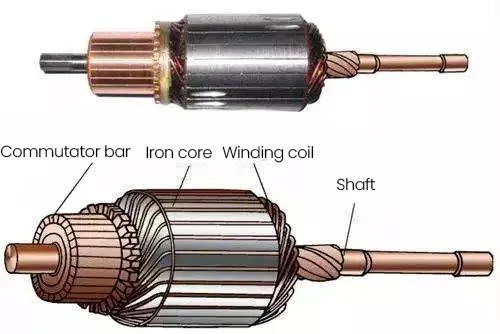
An armature core is the central component of a DC motor’s rotor, serving as the foundation for the armature winding. It’s a cylindrical structure made of magnetic material, typically iron or steel, that rotates within the motor’s magnetic field. Think of it as the heart of the motor, flexing and turning to convert electrical energy into mechanical motion.
But why all the fuss about this seemingly simple piece of metal? Well, the design and quality of the armature core can make or break a motor’s performance. It affects everything from efficiency and power output to heat generation and longevity. In essence, the armature core is where the magic of energy conversion happens in a DC motor.
How Armature Cores work
The armature core provides a low reluctance path for magnetic flux. It acts like a highway for magnetic fields, allowing them to flow freely and interact with the motor’s other components. This interaction is crucial for generating the torque that makes the motor spin.
The armature core supports and houses the armature windings. These copper coils wrap around the core, and when current flows through them, they create their own magnetic field. The interaction between this field and the main field of the motor is what produces rotational force.
As current flows through the windings, they generate heat. The core helps to conduct this heat away from the windings, preventing overheating and potential damage to the motor.
Lastly, the armature core contributes to the overall mechanical strength of the rotor. It needs to withstand the high-speed rotation and potential vibrations without deforming or breaking.
In essence, without a well-designed armature core, a DC motor would be inefficient at best, and non-functional at worst. It’s the unsung hero that enables the smooth, powerful operation we’ve come to expect from these machines.
Construction of Armature Cores
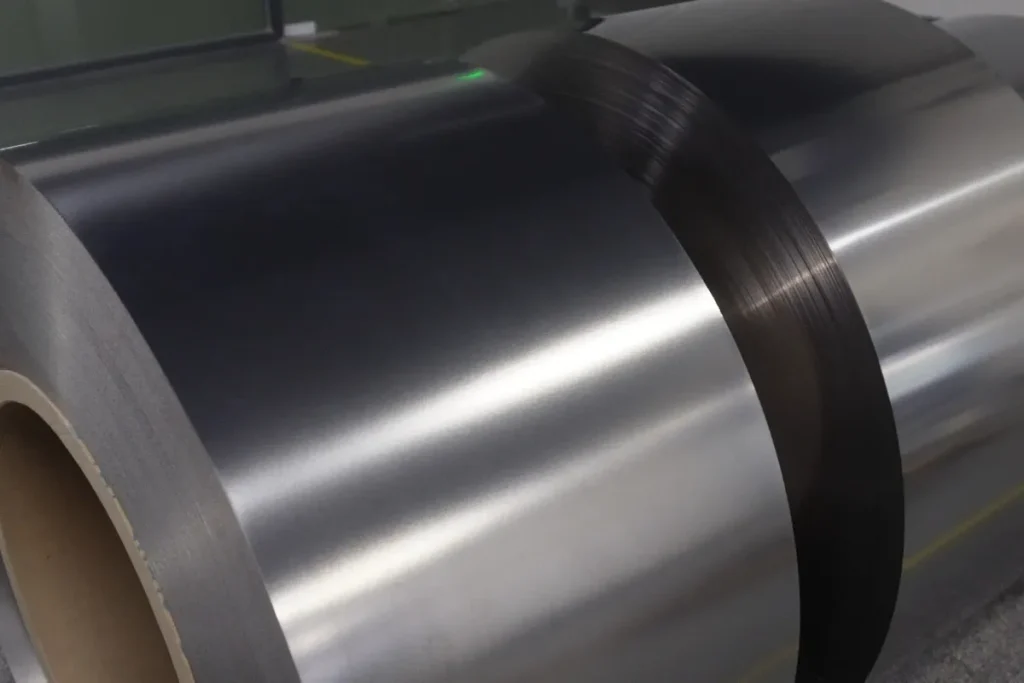
The most common material used for armature cores is silicon steel. It’s all about finding the right balance between magnetic properties and electrical resistance. Silicon steel has high magnetic permeability, which means it can easily become magnetized and demagnetized. This is crucial for the rapid changes in magnetic field that occur in a motor.
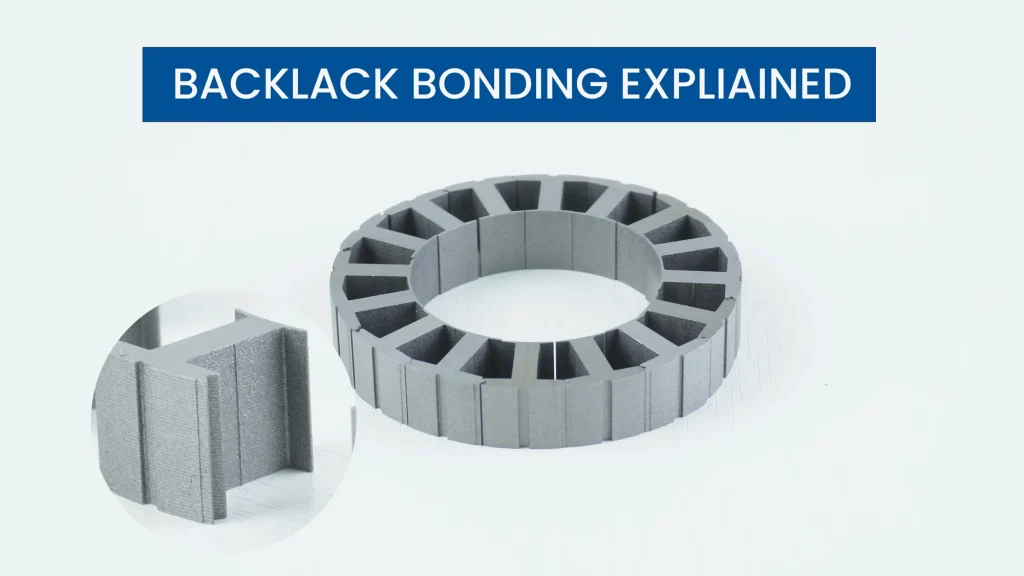
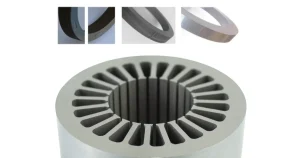
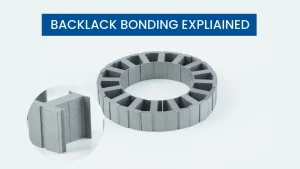
But the armature core isn’t just a solid chunk of metal. It’s actually made up of many thin sheets of silicon steel, stacked together to form a cylinder. These sheets are called laminations, and they’re typically between 0.35mm to 0.5mm thick. Each lamination is coated with an insulating material, usually a type of varnish.
Why go through all this trouble instead of using a solid piece of metal? It’s all about combating eddy currents. These are circular electric currents induced within conductors by a changing magnetic field. In a solid core, eddy currents would cause significant energy loss and heating. By using laminations, we drastically reduce these currents, making the motor more efficient.
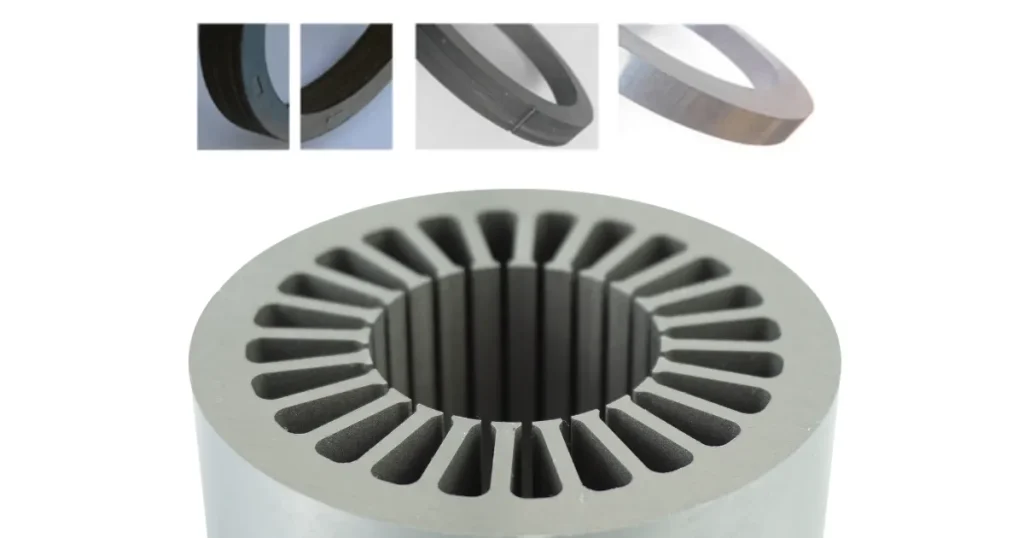
The laminations are stacked and compressed tightly together, then secured to form a rigid cylinder. This cylinder often has slots cut into its outer surface, which will later house the armature windings.
Some high-performance motors might use more exotic materials for their armature cores. For instance, powdered iron cores can be used in certain applications where high frequencies are involved. These cores are made by compressing iron powder particles, each insulated from the others, into the desired shape.
Laminations in Armature Cores

The primary purpose of laminations is to reduce eddy current losses. When a solid piece of metal is subjected to a changing magnetic field, it induces circular currents within the metal – these are eddy currents. These currents generate heat and waste energy, reducing the motor’s efficiency.
By using thin laminations, we effectively “slice” the core into many thin sheets. Each sheet is electrically insulated from its neighbors, usually by a thin coating of varnish or oxide. This insulation prevents eddy currents from flowing between the sheets, dramatically reducing the overall eddy current loss.
But the benefits don’t stop there. Laminations also help in reducing hysteresis losses. Hysteresis is the tendency of a material to retain some magnetization even after the external magnetic field is removed. By using thin laminations, we reduce the volume of material that needs to be magnetized and demagnetized in each cycle, thus reducing hysteresis losses.
Moreover, laminated cores are often easier to manufacture and assemble than solid cores. The laminations can be stamped out of sheet metal, allowing for precise and consistent shaping of the core. This is particularly useful for creating the slots that will house the armature windings.
There’s also a cooling benefit to laminated cores. The small gaps between laminations can allow for better air circulation, helping to dissipate heat more effectively.
In essence, laminations are a clever engineering solution that significantly improves motor efficiency and performance. They’re a perfect example of how understanding and working with the physics of a system can lead to dramatic improvements in its operation.
Types of Armature Core Designs
While the basic principle of armature cores remains the same, there are several different designs used in various types of DC motors.
Smooth Core Armature:
This is the simplest type of armature core. As the name suggests, it has a smooth cylindrical surface without any slots. The armature windings are placed on the surface of the core. While this design is simple and easy to manufacture, it’s not very efficient. The air gap between the armature and the field magnets is larger, which reduces the motor’s efficiency.
Slotted Core Armature:
This is the most common type of armature core used in modern DC motors. The core has slots cut into its outer surface, and the armature windings are placed in these slots. This design reduces the air gap between the armature and field magnets, improving efficiency. It also provides better support and protection for the windings.
Skewed Slot Armature:
In this design, the slots in the armature core are slightly twisted or skewed along the length of the core. This helps to reduce magnetic noise and vibration in the motor. It’s particularly useful in applications where quiet operation is important.
Disc Armature:
Used in some specialized motors, the disc armature is a flat disc rather than a cylinder. The windings are arranged in a radial pattern on the disc. This design can offer advantages in terms of low inertia and quick response times, making it suitable for servomotors.
Hollow Core Armature:
In this design, the armature core is hollow, reducing its weight and inertia. This can be beneficial in applications requiring rapid acceleration and deceleration. However, it may compromise on magnetic performance compared to solid cores.
Each of these designs has its own set of pros and cons, and the choice often depends on the specific requirements of the motor application. Factors like efficiency, noise level, response time, and cost all play a role in determining the most suitable armature core design.
Factors Affecting Performance
The performance of an armature core isn’t just about its design – several factors can significantly impact how well it functions within a DC motor. Understanding these factors is crucial for both motor designers and users.
- Material Quality: The magnetic properties of the core material play a crucial role in its performance. High-quality silicon steel with the right balance of magnetic permeability and electrical resistance is essential. Impurities or defects in the material can lead to increased losses and reduced efficiency.
- Lamination Thickness: We’ve discussed the importance of laminations, but their thickness matters too. Thinner laminations generally result in lower eddy current losses, but they’re also more expensive to produce and assemble. Finding the right balance is key.
- Insulation Between Laminations: The quality and consistency of the insulation between laminations can significantly affect core performance. Poor insulation can lead to short circuits between laminations, increasing eddy current losses.
- Core Geometry: The shape and size of the core affect its magnetic properties. Factors like the length-to-diameter ratio, slot design, and overall size all play a role in determining the core’s performance.
- Assembly Quality: How well the laminations are stacked and compressed can impact the core’s performance. Poor assembly can lead to air gaps between laminations, reducing the core’s overall magnetic permeability.
- Operating Temperature: As the temperature of the core increases, its magnetic properties can change. This can lead to increased losses and reduced efficiency. Proper cooling is essential for maintaining optimal core performance.
- Frequency of Operation: While DC motors operate on direct current, the magnetic field in the armature core is constantly changing as the rotor spins. The frequency of this change can affect core losses, particularly at high speeds.
- Mechanical Stress: The core is subjected to mechanical stresses due to rotation and magnetic forces. Over time, these stresses can lead to deformation or damage, affecting performance.
- Surface Treatment: Some armature cores undergo surface treatments to improve their magnetic properties or corrosion resistance. The quality of these treatments can impact long-term performance.
- Environmental Factors: Exposure to moisture, corrosive substances, or extreme temperatures can degrade the core over time, affecting its performance.
Remember, the armature core doesn’t operate in isolation – its performance is intimately tied to the other components of the motor. A well-designed core can be compromised by poor quality windings, or vice versa. It’s the synergy between all components that ultimately determines the motor’s performance.

Innovations
The field of armature core technology is not standing still. Ongoing research and development are pushing the boundaries of what’s possible, aiming to create more efficient, powerful, and reliable DC motors. Here are some of the exciting innovations in this field.
Advanced Materials
Researchers are constantly exploring new materials for armature cores. For instance, amorphous metal alloys are being investigated for their potential to reduce core losses even further than traditional silicon steel. These materials have a disordered atomic structure that can result in lower hysteresis losses.
Nanocrystalline Materials
Nanocrystalline soft magnetic materials are another area of interest. These materials consist of extremely small crystalline grains (typically 10-100 nanometers) embedded in an amorphous matrix. They can offer excellent magnetic properties and low core losses.
Composite Cores
Soft magnetic composites (SMCs) are being developed that combine magnetic powder particles with a non-conducting binder. These materials can offer unique 3D flux capabilities and potentially reduce eddy current losses.
Optimized Lamination Designs
Advanced computer modeling and simulation techniques are enabling the design of more efficient lamination patterns. This includes optimizing the shape and arrangement of laminations to minimize losses while maximizing magnetic performance.
Thin Film Technology
Some researchers are exploring the use of thin film technology to create ultra-thin laminations or even entirely new core structures. This could potentially lead to cores with extremely low losses.
Resources: